UTM contributes to SDG 2 through nutrition and One Health teaching, research on animal and food health, work on water use in farming, and scientific cooperation on water, energy and food. The activities involve the Faculty of Medicine of Tunis, the Faculty of Sciences of Tunis (FST), the National Engineering School of Tunis (ENIT), the Faculty of Economic Sciences and Management of Tunis (FSEGT) and the Higher Institute of Biotechnology of Sidi Thabet (ISSBAT), with partners such as the National Institute of Nutrition, the Ministry of Agriculture, Université Laval and the PRIMA programme.
Faculty of Economic Sciences and Management of Tunis · Head of the LEDDRNA laboratory
JA
UTM SDG 2 Ambassador
Prof. Jalila Atti
Our year for SDG 2
One Health teaching at the Faculty of Medicine of Tunis: certificate and research master
The Faculty of Medicine of Tunis (FMT) and the National School of Veterinary Medicine of Sidi Thabet (ENMV) launched the first edition of the complementary studies certificate "One Health", organised by the veterinary school in partnership with FMT, with pre-registration for medical doctors through an online link on the poster. The One Health approach links human, animal and ecosystem health and covers topics such as zoonotic diseases, food safety and antimicrobial resistance.
FMT then opened applications for a research master entitled "One Health" (Une seule santé), run with the ENMV under a co-accreditation and co-diplomation agreement and open to applicants through the pre-registration platform of UTM. The programme aims to train researchers, experts and managers able to address health, environmental and societal challenges. Eligible candidates included doctors, pharmacists, veterinarians and agronomy engineers, and holders of a licence in health sciences, life and earth sciences, environment, geography, climatology or ecology.
The press presented the master as the first interconnected One Health programme in Tunisia, developed by the University of La Manouba and UTM, with FMT providing the human medicine side and the ENMV the veterinary expertise, and covering zoonotic diseases, pandemic management and antimicrobial resistance. An inaugural conference was held at FMT, where the two institutions signed a One Health charter to formalise their joint commitment; the United Nations Population Fund in Tunisia and international partners support the programme.
Masterclass on One Health and nutrition: issues and biosecurity
FMT organised a masterclass entitled "One Health and nutrition: issues and biosecurity", coordinated by Drs N. Ben Amor and R. Baati, with a downloadable programme and an online registration form. The title places nutrition alongside biosecurity within the One Health approach, which connects the safety of food with animal and human health. The faculty also announced a One Health day on its website, published with a poster for a seminar on the theme.
Obesity teaching sessions at the Faculty of Medicine of Tunis
On the occasion of World Obesity Day, the Environment and Work Committee of FMT, in collaboration with the Tunisian Association of Nutrition Sciences (ATSN) and the Training and Information Service of the National Institute of Nutrition, organised a post-university teaching session entitled "Obesity: a multidisciplinary journey, from pathophysiology to personalised interventions". The session was held in the morning and lasted three hours. The faculty returned to the subject in later teaching, with a masterclass on obesity and infertility and a post-university session on childhood obesity. Obesity is one of the forms of malnutrition covered by the nutrition target of SDG 2, which calls for an end to all forms of malnutrition.
Continuing education on nutrition in cancer, neurological disease and surgery
The post-university teaching and masterclass programme of FMT included several sessions in which nutrition was the central theme. They covered cancer and nutrition, offered both as a masterclass and as a post-university session, nutrition and neurological and neurodegenerative diseases, and nutritional care in the perioperative period. Other sessions linked diet and health in different ways: a post-university session on diabetes and Ramadan, a masterclass on the microbiota and health, and a later session on the microbiota and common pathologies. Registration for the masterclasses was done through online forms or QR codes printed on the posters.
Plant biotechnology students study aquaponics at the Centre Technique d'Aquaculture
Third-year Plant Biotechnology students of the Higher Institute of Biotechnology of Sidi Thabet (ISSBAT) made a study visit to the pilot station of the Centre Technique d'Aquaculture (CTA), described by the institute as field immersion within its commitment to quality education. They saw the hatching, rearing and fattening of tilapia and Chinese carp and learned how a media-bed aquaponic system works in practice.
The visit also covered the integrated cultivation of tomato, mint and zucchini together with fish production, and the measurement of the physico-chemical parameters of the water in the system. The institute thanked the Director General of the CTA, Moncef Khniss, the director of the pilot station, Ramzi Charrabi, and the station technician. In a separate visit, third-year students of the same programme toured a plant nursery in Bir Drassen, in northern Nabeul, where they saw ornamental plant species and categories and learned the multiplication techniques used in nurseries.
Food quality students visit a beverage and food-industry site
Second-year Licence students in Biotechnology – Food Quality Control and Hygiene and first-year Master's students in Biotechnology Risk Management of ISSBAT visited the industrial site of the Société Générale des Boissons et des Industries Alimentaires (SGBIA) as part of their vocational training. The visit was designed to let students understand the stages of beverage production, see how food safety management systems are applied, identify critical control points and learn about the tools used to monitor and control processes, and to link classroom learning with conditions on an industrial site.
When One Health meets Eid
UTM headquarters hosted a staff awareness day titled "Quand le One Health fête l’Aïd el Fitr", organised with the Environment and Work Committee of the Faculty of Medicine of Tunis, the Zouhair Kallel National Institute of Nutrition and Food Technology and the Tunisian Society of Clinical Physiology. Held in connection with World Obesity Day, the day was devoted to balanced eating.
Speakers from the Faculty of Medicine and the National Institute of Nutrition addressed Ramadan, Eid and food safety from a One Health perspective, the effect of festive eating habits on obesity, and dietary advice for Eid al-Fitr. The medical team presented obesity as a gateway to chronic disease, with cardiovascular harm and a higher risk of certain cancers. They explained that the excess of sugar common during festivities can weaken the body's defensive cells and raise the risk of infection, and advised participants to follow an appropriate eating sequence during Eid meals and to limit sugar and fat in order to avoid food shocks after the fasting period.
AviBiocin: natural alternatives to antibiotics
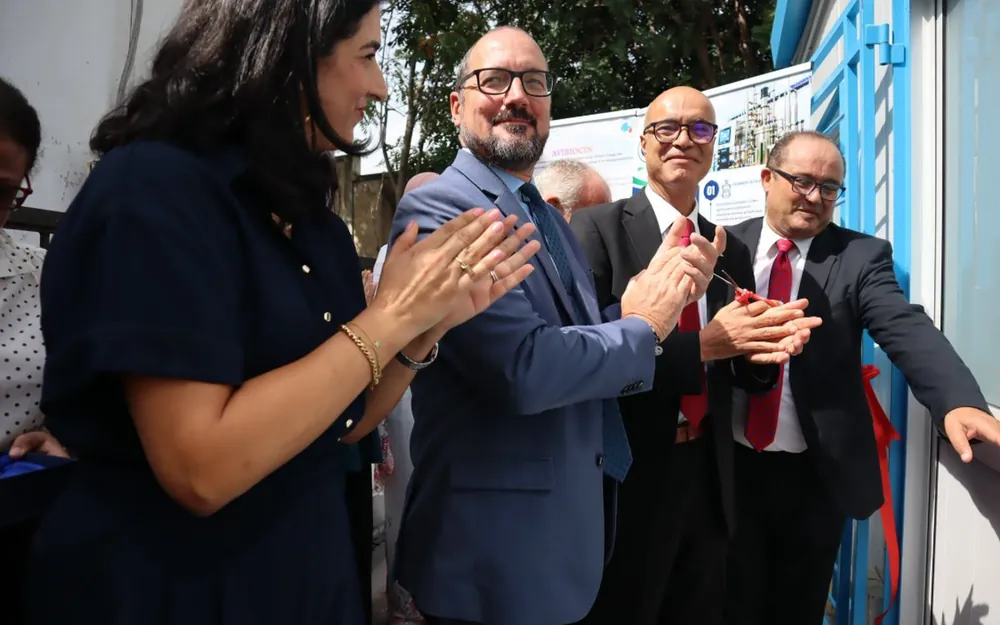
The Higher Institute of Biotechnology of Sidi Thabet (ISSBAT) inaugurated the first integrated pilot fermentation unit of the AviBiocin project. The unit has fermenters of up to 150 litres and produces bacteriocins, natural alternatives to antibiotics, within a One Health approach that links animal health, consumer health and the environment. It is equipped with a continuous centrifuge, a spray dryer, a freeze dryer and HPLC analysis, and supports scale-up from laboratory proof of efficacy to pilot and semi-industrial production.
The ceremony was attended by the Ambassador of Canada, the Director General of the National Agency for the Promotion of Scientific Research (ANPR), two vice-presidents of UTM, the director of ISSBAT, and the Tunisian and Canadian leaders of the unit. Prof. Karim Ben Slama of ISSBAT is the scientific lead of the project in Tunisia. Field trials have been carried out with a private poultry company.
AviBiocin is funded by the International Development Research Centre (IDRC) of Canada under its InnoVet-AMR programme and associates ISSBAT with Université Laval, the Muséum national d'histoire naturelle in France, the University of La Rioja in Spain and the National School of Veterinary Medicine of Sidi Thabet. Prof. Ismaïl Fliss of the Faculty of Agriculture and Food Sciences of Université Laval obtained CAD 1.6 million for the three-year project, which aims to develop eco-responsible and economically viable industrial processes for bacteriocins and to assess them as a natural alternative to antibiotics in industrial poultry production. The unit is meant to develop and scale up fermentation processes, to produce pilot batches that set production and quality standards and to enable technology transfer, and it also serves as a platform for future research, training and university-industry collaboration aimed at reducing unnecessary antibiotic use, especially in poultry.
Water-saving pilot on farms in Manouba and Gabès under the PRIMA programme
The Faculty of Sciences of Tunis (FST) launched the pilot project "Water preservation" on a farm in the Jedaida delegation of the Manouba governorate. Part of PRIMA, the Partnership for Research and Innovation in the Mediterranean Area, it uses artificial intelligence, geographic information systems and remote sensing, and is carried out in Tunisia by FST in partnership with the regional commissariats for agricultural development (CRDA) of Manouba and Gabès. Salwa Saïdi, a university researcher, initiated and chairs the project, which receives an annual allocation of 45,000 euros within a total budget of 2.6 million euros shared between the Euro-Mediterranean countries involved. Universities and researchers from Morocco, Algeria, Egypt, Spain, France, Germany, Italy and Portugal cooperate in it, together with public and private economic and social partners.
Sensors are installed in one artesian well in each of the two zones, in the north and the south, and are made available to farmers. They give instant measurements of several water parameters in order to determine the causes of salinity, and the data are analysed to design solutions that reduce climate impacts on soil and agriculture. The Manouba area was chosen because of a decline in the yield and quality of irrigation water, rising salinity and waterlogged clay soil. Jamel Jaouadi, a soil and geology specialist and technical member of the project at the CRDA, said that the project also aims to place research results at the service of the agricultural sector and food security under climate change. The sample of farmers is meant to be widened so that the results benefit the whole agricultural zone.
UTM later signed a cooperation agreement with the General Directorate of Water Resources of the Ministry of Agriculture, Water Resources and Fisheries at FST. The ceremony also marked the creation at the faculty of the Tunisian living lab for water protection within the Euro-Mediterranean project PRIMA SAVE Water, and the agreement supports national water security by turning research into solutions.
PAQ-COLLABORA Assur Cereals: ENIT-led project on drought insurance for cereal producers
ENIT published the programme of the closing workshop of the PAQ-COLLABORA project, known as PAQ Collabora Assur Cereals. The project aims to contribute to reducing Tunisia's trade deficit in the cereal sector by supporting agricultural risk management related to drought and strengthening the capacity to process satellite imagery for climate adaptation. A consortium of five partners led by ENIT implements the project, which includes the Bizerte Competitiveness Pole. It contributes to developing indices that make it easier for cereal producers and other stakeholders of the Tunisian cereal sector to adopt drought insurance. The approach uses meteorological and satellite data to monitor crop health, to place agricultural campaigns in the context of climate variability and to predict harvests so as to optimise production costs.
ENIT conference on organic agriculture
ENIT announced a conference entitled "L'Agriculture Biologique" (Organic agriculture) on its website. The conference belongs to a series of scientific events at the school that deal with natural resources and sustainability, including a conference on the co-creation of science for solutions in hydrology and water resources management and a workshop on integrated groundwater modelling.
PRIMA SWATCH workshop on water efficiency of agro-sylvo-pastoral systems
ENIT announced a workshop of the PRIMA SWATCH project at the KANTRA agricultural training centre in Siliana, in north-western Tunisia, which UTM's report on the project describes as its closing seminar. The project dealt with strategies for increasing the water efficiency of agro-sylvo-pastoral systems, which combine crops, trees and livestock, under climate change in semi-arid watersheds of the Mediterranean.
LEDDRNA research on fishing and farming communities of the Bizerte lagoon basin
The laboratory of Economics of Sustainable Development, Natural Resources and Agriculture (LEDDRNA) of the Faculty of Economic Sciences and Management of Tunis (FSEGT) recruited a supervisor and enumerators for a field survey for the GEL GINTEL Bizerte project, which is co-financed by the European Union. The survey, planned over about four weeks, was to interview more than 600 people in six delegations around Lake Bizerte (Bizerte Sud, Menzel Bourguiba, Menzel Jemil, Zarzouna, Tinja and Bizerte Nord) using a structured questionnaire. The population surveyed included residents, fishers, shellfish farmers, farmers and industrialists of the lake's watershed.
The laboratory later held, at FSEGT and under the same project, an international seminar on the governance and management of Mediterranean lagoons. It compared experiences from Tunisia, France and Italy, including the Bizerte lagoon and Lake Ichkeul and the Italian lagoon-contract model, and addressed pressures such as urbanisation, economic activity, climate change and competing uses. The seminar named marine fisheries resources and the local economy among the stakes of participatory and adaptive governance. Prof. Lamia Mokaddem, director of LEDDRNA, was among the speakers. The seminar was opened by the FSEGT Dean, Prof. Adel Boubaker, and by Dhekra Gharbi, head of the management unit of the EcoPact programme at the Ministry of Environment, and its first session, on the Bizerte lagoon and Lake Ichkeul, was moderated by Prof. Béchir Bejaoui of the National Institute of Marine Sciences and Technologies.
Water, energy, food and ecosystems at the Mediterranean desalination conference
UTM, the Tunisian Desalination Association (TDA) and the European Desalination Society (EDS) held the 10th Mediterranean Conference on Water Treatment and Desalination (CMTDE) in Hammamet, under the auspices of the Ministry of Higher Education and Scientific Research and the Ministry of Agriculture. The programme was built around the links between water, energy, food and ecosystems. Experts from Spain, Italy, France and Denmark took part, together with representatives of industry and the Secretary of State to the Minister of Agriculture. UTM had also publicised the ninth edition of the conference on its website, which shows that the event is a recurring series.
NutriFit 2.0: nutrition and sport conference day
Nutri Ambassadors organised NutriFit 2.0, a conference day held at the National Centre of Sports Medicine and Science and devoted to nutrition and sport. The programme included conferences on key topics in nutrition and athletic performance, led by experts, and gave participants the opportunity to deepen their knowledge of the relationship between food and sports performance.
Lectures on nutraceuticals and dietary supplements within the PsyCoMed project
The Laboratory of Neurophysiology, Cellular Neuropathology and Biomolecule Valorization welcomed Dr Marco Bernasconi, chief executive officer of the Italian company FLANAT Research, within the PsyCoMed project of the Marie Skłodowska-Curie Actions. He gave lectures for researchers and professionals in pharmaceutical sciences, biology, agronomy, nutraceuticals and medicine, on research and development in nutraceuticals, dietary supplement compounds and their preventive roles, claims and regulatory frameworks in Europe, market perspectives for finished products, the life cycle approach and life cycle assessment, and case studies from research and innovation projects. The sessions took place at the Faculty of Sciences of Tunis over two days.
Take the SDG 2 report with you
The 2026 report for SDG 2 is a 8-page brochure with every activity and photograph from this page.