The University of Tunis El Manar (UTM) worked for reduced inequalities through its international student community, its inclusion and accessibility measures, and its partnerships with universities in Africa, the Mediterranean and Palestine. Festivals and forums brought together students of 35 nationalities, study days and student clubs addressed disability and inclusive communication, and scholarships, joint degrees and listening services widened access to opportunities for students and staff.
Third UTM Phare des Cultures festival for international students
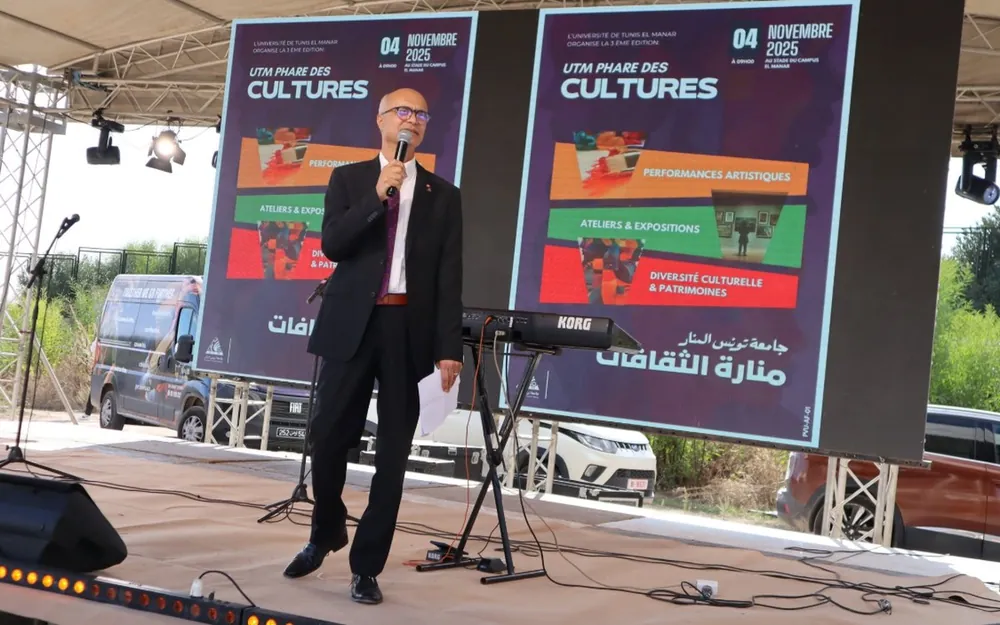
UTM held the third edition of “UTM Phare des Cultures”, a festival devoted to the diversity of its international student community, on the sports grounds of the Farhat Hached campus. The university’s announcement presented the day as a celebration of diversity and listed gastronomy, performances, cultural stands and meetings, starting in the morning. UTM honoured Prof. Fadhila Derraji, its SDG 10 ambassador, on this occasion.
The call for participation set out the aims of the festival: to ease the integration of students into university life, to develop their cultural and artistic talents, and to let each student community express its values and heritage. Every community was asked to form a team of four to fifteen people to present its country through two components, a cultural pavilion reflecting the culture and heritage of the country, with its national flag displayed, and an artistic performance chosen by the students, such as a fashion show, music, dance or poetry.
International Students Forum at the Faculty of Sciences of Tunis
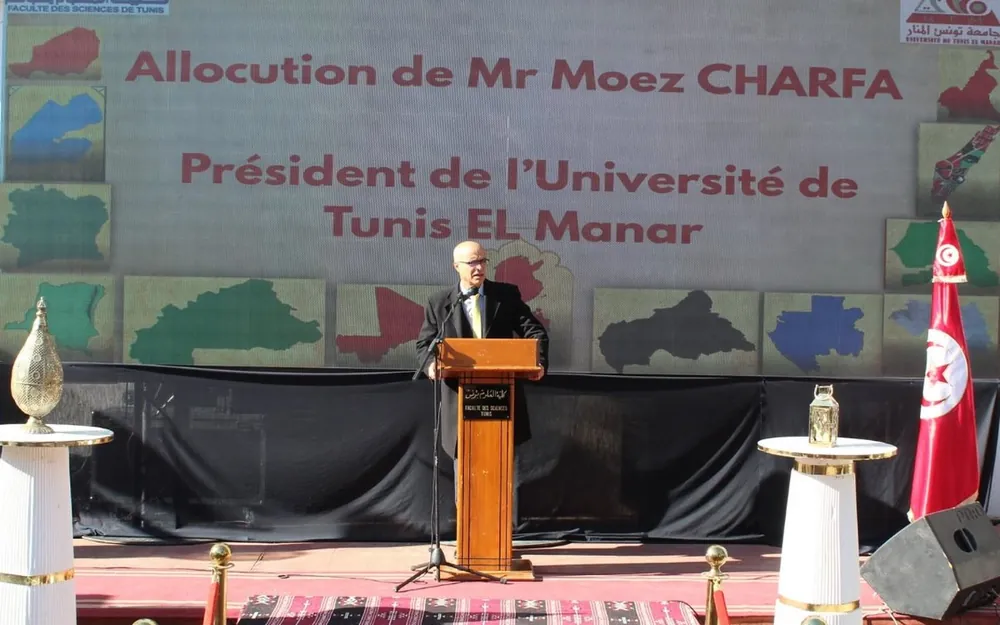
The Faculty of Sciences of Tunis (FST) hosted the International Students Forum, which the UTM President opened in the presence of Malek Kochlef, Director General of International Cooperation at the Ministry of Higher Education and Scientific Research, and of representatives of embassies. UTM welcomes international students of 35 nationalities, and the forum brought this community together with the university leadership, a ministry official and diplomatic representatives. UTM’s website also refers international students to the national Guide for International Students in Tunisia.
42nd Arab conference of admission and registration officers
UTM and the University of Carthage organised in Hammamet the 42nd annual conference of the Arab Organization of Admission and Registration Officers, under the patronage of the Ministry of Higher Education. Experts from 18 countries discussed the role of admission and registration in improving the global standing of universities. Six priority themes were set: attracting talented students through targeted admission policies, the digital transformation of administration, the link between academic quality and admission procedures, internationalisation, internal audit of processes, and visibility in global rankings.
The conference also aimed to strengthen cooperation among Arab universities, to share good practices and to support transparency, efficiency and attractiveness, in particular for international students. Its sessions included the accessibility of the electronic platforms of Arab universities for students with special needs, which ties admission and registration services to the inclusion of students with disabilities. It was the second time that Tunisia hosted the event.
“1001 stars”: a sign-language workshop at a student astronomy evening
The Astronomy Club of FST held the fourth Ramadan astronomy evening, “1001 stars”, a student-run event that combined the observation of the sky with a collective iftar and a sign-language workshop. The workshop added an inclusion component to the evening. It fits the wider inclusion work of UTM, which runs an Inclusive University project, an Office for Students with Disabilities and, at the Higher Institute of Human Sciences of Tunis (ISSHT), a bachelor’s degree in sign language.
Study day on inclusive communication at the Faculty of Medicine of Tunis
The Faculty of Medicine of Tunis (FMT) hosted a multidisciplinary study day on communication and access to knowledge through new technologies, with a focus on the challenges and practices of inclusive communication. It was organised with the Intersignes research laboratory, the laboratory of semantic and computational linguistic studies and the Ministry of Health, and was opened by UTM President Prof. Moez Chafra. The organisers presented the day as a milestone towards the sustainable development goals on education, reduced inequalities and connected health.
The day was co-coordinated by Dr Walid Zidi, the first blind PhD holder in Tunisia, and Dr Hind Soudani. It adds a scientific and public-health dimension to the inclusion work of UTM, which also trains visually impaired and blind students in physiotherapy at its Higher School of Health Sciences and Techniques of Tunis.
Inclusion of persons with special needs in nursing and health training at ISSIT
The Higher Institute of Nursing Sciences of Tunis (ISSIT) welcomed a three-day mission of the French Red Cross devoted to joint training projects, medical simulation and the inclusion of persons with special needs in training. UTM’s health-profession schools bring practical experience to this subject: the Higher School of Health Sciences and Techniques of Tunis trains visually impaired and blind students in physiotherapy, and the Higher Institute of Human Sciences of Tunis offers a bachelor’s degree in sign language.
ISSIT also publishes a written instruction for the handling of particular needs. It covers students, teachers, administrative staff, external contributors and visitors, and aims to guarantee equitable access to services and training, to provide appropriate adaptation measures and to act with dignity and confidentiality. A person with a particular need fills in a request form at the service concerned, such as the registrar’s office for students, and the outcome of the request is communicated to that person.
Framework agreement with Palestine Polytechnic University
UTM signed a framework cooperation agreement with Palestine Polytechnic University, with the Dean of the Faculty of Economic Sciences and Management of Tunis (FSEGT) taking part in the signing. The agreement opens the way to specific cooperation agreements between establishments of the two universities.
It continues UTM’s solidarity partnerships with Palestinian universities, whose primary goal is to alleviate hardship and to support students and staff, especially in times of crisis. The partnerships rest on concrete academic exchange programmes and on dedicated support for students in need, so that the pursuit of knowledge remains a force for resilience and dignity.
Intra-Africa BRAINS scholarships for master’s and doctoral students
UTM relayed the sixth call for applications of the BRAINS programme, which offers fully funded Intra-Africa scholarships to master’s and doctoral students in life sciences, health sciences, mathematics and computer science. The scholarships fund master’s research placements of ten months and doctoral research stays of one year in partner institutions abroad, and they cover living costs, flights and social cover.
The programme is funded by the European Union, and applications were made online through the programme website before a deadline set in the call. UTM appears among the partner universities shown on the call, together with Stellenbosch University, the University of Ghana, Université Polytechnique Hauts-de-France, Strathmore University and other institutions.
South–South research cooperation with the University of Fort Hare
UTM and the University of Fort Hare in South Africa signed a memorandum of understanding that the Tunisian ambassador to South Africa, Karima Bardaoui, described as the institutional basis of their cooperation. A UTM delegation later attended the Research Week of Excellence at Fort Hare, where the ambassador welcomed the growth of bilateral links in higher education and scientific research. The two universities agreed that UTM would join scientific events organised by the Tunisian mission in South Africa and that they would build partnerships with other South African academic and research institutions, with a focus on research and on exchanges of students and teachers.
At the Research Week, UTM Vice-President for Research Prof. Asma Gati gave a keynote on strengthening intra-African research, presenting UTM’s commitment through the projects Intra-Africa BRAINS, AFRIDI and the Erasmus+ project DigIt Africa, which UTM coordinates. AFRIDI offers exchange scholarships to students and researchers within Africa and strengthens research networks among African universities.
DigIt Africa: digital capability for African universities and an inclusive digital summit
UTM coordinates DigIt Africa, an Erasmus+ capacity-building project titled “Fostering Digital Transformation in Africa by Building Digital Capability for All”. The project develops a competency-based approach that adapts existing digital transformation frameworks to African universities, takes into account the wide differences in digital maturity between countries and avoids a one-size-fits-all model. It offers university leaders a strategy built on eight actions: assess, encourage, train, facilitate, recognise, reward, share and evaluate. Partners held a study visit at the University of Bergen and a mid-term consortium meeting at Université Côte d’Azur.
The project also trains students and staff. UTM published DigItAfrique, a free, self-paced online training in non-technical transversal digital skills, available in French and English. UTM also organised the MENAFRICA Digital Summit at the National Engineering School of Tunis (ENIT), which aimed to assess the state of digitalisation across sectors, share good practices and propose actions for an inclusive and sustainable digital transformation. Parallel training sessions covered advanced digital skills, artificial intelligence, inclusion, collaboration and open education, cybersecurity, blockchain and the metaverse.
Joint master’s degree in Migration Studies with scholarships and mobility
UTM continued to offer, with the universities of Tunis and Manouba, the joint master’s degree “Migration Studies: Governance, Policies and Cultures”, an interdisciplinary two-year programme taught in English at the Higher Institute of Human Sciences of Tunis. A call for applications to the next intake was published on the university’s website, and UTM also published the list of students pre-selected for Erasmus+ study mobility to the University of Palermo within this master’s programme.
The call presents the international opportunities attached to the degree: a double degree with the University of Palermo, Erasmus+ mobility grants in Europe and a partnership within the AICS-CDN consortium led by the University of Pavia. Limited scholarships are available for qualified Tunisian and international students within the AICS-CDN project, and applicants are pre-selected on a score that combines the average of their degree years, the average of credits and a bonus for the main session.
Funded mobility calls: HEALTHMED scholarships and Erasmus+ credit mobility
UTM, a partner of the project HEALTHMED, “Innovation in medical education, digital transition, sustainable development and healthcare”, called for applications for scholarships for doctoral students and for students in health or engineering fields. Four student scholarships financed mobility of two to three months at universities in Sicily and Calabria, namely Kore University of Enna, the University of Messina and Magna Graecia University of Catanzaro, and four teachers and associates could travel for seven days. A commission ranked applications out of twenty points on four equally weighted criteria: academic excellence, curriculum vitae, mobility project and motivation letter.
UTM also published calls for funded study mobility under Erasmus+ International Credit Mobility at partner universities in Italy, France, Estonia and Greece, and a final list of students selected for MESRS–Mitacs scholarships for end-of-studies projects in Canada. Calls of this kind, with published selection procedures, give students of a public university access to funded periods abroad.
WE4LEAD: gender equality and women’s leadership in higher education
UTM took part in WE4LEAD, the Erasmus+ project on gender equality and women’s access to leadership in higher education, which ran for three years with partners in Algeria, Lebanon, Spain, France and Italy and ended with a final conference in Marseille. UTM’s WE4LEAD team held training days for key higher-education actors on gender and leadership and on harassment in the university, both co-funded by the European Union, and met in a drafting committee for UTM’s Gender Equality Plan with partners that had signed conventions with the university.
As outputs of the project, UTM signed two cooperation agreements, one with the Tunisian association of women mathematicians, chaired by Salma Negzaoui, and one with the Tunisian association for the sustainable development goals, chaired by Nejib Boulaares. The agreements aim to strengthen the capacity of women researchers through training, publishing support and conferences.
Cell for Parity and Respect opened at the University Medical Centre
UTM inaugurated the premises of its Cell for Parity and Respect at the Tawhida Ben Cheikh University Medical Centre, within the WE4LEAD project. The cell works to prevent all forms of violence and offers listening and support to students and staff who face psychological difficulties, verbal violence, racism or gender-based discrimination. It is staffed by university psychologists, psychiatrists of the Faculty of Medicine of Tunis and psychology teachers of the Higher Institute of Human Sciences of Tunis.
The inauguration brought together vice-presidents of UTM, members of the cell, the Dean of FST, the director of the Higher Institute of Applied Biological Sciences of Tunis (ISSBAT) and university psychologists. The cell extends the confidential reporting and psychological support that UTM’s equality, diversity and inclusion policy provides for.
Psychological support and specific-needs services for students
The Higher Institute of Applied Biological Sciences of Tunis (ISSBAT) offers its students a space for listening and psychological support, run by the institute’s psychologist every Tuesday throughout the academic year. Students can request an appointment for stress, difficulties in learning or concentration, relational difficulties, anxiety or discouragement. The Faculty of Medicine of Tunis offers five request forms for students with specific needs: tutoring, psychological support, accommodations for physical disability, assistance for other specific needs and assistance related to the training context. Requests are handled as quickly as possible and in confidence.
UTM also organised open days on health and psychological education for students at the Tawhida Ben Cheikh University Medical Centre, with the Regional Health Administration of Tunis and the Health Club of FST. Doctors and psychologists offered nutritional advice, free psychological consultations and free medical examinations to students over four days.
Access to university: orientation days, reorientation competition and integration week
UTM organised regional information days on university orientation at the National Engineering School of Tunis (ENIT), on the Farhat Hached campus, so that new baccalaureate holders could obtain information and clarifications on orientation procedures and on the training offer. ENIT hosted a further regional information day on university orientation for new baccalaureate holders.
For students already enrolled, UTM published the results of its university reorientation competition, with the list of admitted candidates and a dedicated online platform. The competition offers enrolled students a second route into a different programme.
Once students are admitted, institutions help them settle in. The Higher Institute of Applied Biological Sciences of Tunis (ISSBAT) held an integration week for its new students, opening with round tables that brought together students, teachers and alumni to talk about life at the institute, careers and student associations, followed by conferences on the economy, artificial intelligence and biotechnology.
ISSBAT festival of traditional dress: Tunisian and African heritage
The Higher Institute of Applied Biological Sciences of Tunis (ISSBAT) organised a Festival of Traditional Dress that aims to highlight the cultural heritage and the diversity of Tunisian and African traditional garments. The event gathered students around a moment of discovery and cultural sharing, and it joined the festivals of diversity held across UTM, such as the Phare des Cultures of the international student community.
Assistive robotics for persons with disabilities at the RISC-Lab Days
The RISC-Lab, the robotics, computing and complex systems research laboratory of the National Engineering School of Tunis (ENIT), held its research days at the school, with presentations of its projects, seminars by guest researchers and talks by doctoral students. Among the projects presented was a robotised assistance system for persons with disabilities, carried out under the Utique cooperation programme. The laboratory also presented work on the early diagnosis of dementia and on mental-health diagnosis using machine learning.
Take the SDG 10 report with you
The 2026 report for SDG 10 is a 8-page brochure with every activity and photograph from this page.