Quality education at the University of Tunis El Manar (UTM) rests on programme renewal, certified quality management, teacher training and support for students. UTM and its establishments renewed bachelor’s programmes within the national accreditation process, launched new degrees, earned international and ISO certifications, trained teachers in transversal skills, offered orientation and counselling to new students, and signed partnerships that widen mobility, joint degrees and language learning.
Vice-President of the University of Tunis El Manar
Our year for SDG 4
Coordination with the DGRU on the accreditation of programmes
UTM held a coordination meeting on the habilitation (accreditation) of its programmes with Prof. Mounir Ayadi, Director General of University Renovation at the Ministry of Higher Education and Scientific Research (DGRU). The meeting belonged to a national exercise in which each establishment submitted renewed bachelor’s programme files to the ministry for validation, with the stated aim of aligning graduates’ skills with the needs of the labour market and reducing graduate unemployment.
The exercise was national in scale. Institutions submitted 1,904 programme proposals, of which 1,328 came from public and 576 from private institutions, because the accreditation of the existing bachelor’s programmes had reached its term. The Council of Universities validated around 1,190 active bachelor’s programmes, and the central administration launched an audit and systematic revision of every national bachelor’s programme. A binding national reference guide was prepared as the single benchmark for evaluating, validating and presenting programmes, with a phased rollout of the new generation of programmes. Several of the new programmes described in this report, such as those of the Faculty of Economic Sciences and Management of Tunis, were presented as part of this accreditation process.
New programmes and employability partnerships at FSEGT
The Faculty of Economic Sciences and Management of Tunis (FSEGT) renewed its training programmes as part of the accreditation process led by UTM. The renewal added four tracks: economic intelligence and evaluation in economic sciences, human resource management in management sciences, e-commerce in management informatics, and Business and Economic Analytics. Existing programmes were also updated to strengthen advanced skills in money, finance, banking and insurance, international trade and finance, marketing, management, accounting and business intelligence. UTM stated that the aim is to align teaching with developments in academic fields and with the changing demands of the job market.
The Business and Economic Analytics track is a pilot bachelor’s degree taught entirely in English, designed to international academic standards and addressed to the strongest baccalaureate graduates. The UTM President, Prof. Moez Chafra, explained in a radio interview that the degree combines economics, management and artificial intelligence and is meant to attract more English-speaking students, in a university that counts 550 international students.
Partnerships added a practical dimension to these programmes. At the faculty’s job fair, the Arab Tunisian Bank signed an internship agreement with FSEGT that formalised a long-standing collaboration, and its Director General, Riadh Hajjej, encouraged future graduates to build hybrid skills. FSEGT also signed a partnership with the National Federation of Tunisian Municipalities, represented by its President Fathi Mejri, together with the Dean of FSEGT, Adel Boubaker. The agreement provides for internships in Tunisian communes, joint research and training projects, and student involvement in designing local solutions in financial management, economic development and public innovation.
New degrees in life sciences, bioinformatics, computing and One Health
The Faculty of Sciences of Tunis (FST) introduced a selective bachelor’s degree in advanced life sciences, designed by pedagogical committees to match international technological standards. It has two tracks. Biophysics, described in the press as the first university programme of its kind in Tunisia, combines cell biology, quantum and thermal physics and engineering, and leads to work in biomedical equipment maintenance, medical imaging systems and applied research laboratories. Bioinformatics and biological systems focuses on algorithmic engineering and biological big data, including mathematical modelling of cellular systems and genomic sequencing. The restructuring followed the ministry’s strategy of reducing oversubscribed fields in favour of specialised programmes.
The Higher Institute of Applied Biological Sciences of Tunis (ISSBAT) and the Higher Institute of Computer Science (ISI) jointly opened BioXplore, a national bachelor’s degree in bioinformatics and biological data exploration. UTM describes it as the first national bachelor’s degree delivered through co-diplomation between two of its establishments. It combines biology, computing, data science and artificial intelligence for fields such as digital health, genomics and precision agriculture. ISI also created a five-year integrated preparatory cycle in computer science: a two-year preparatory stage with a common core, then a three-year engineering stage with four specialisations (software engineering, AI and data science, embedded systems and IoT, intelligent networks and services) and four progressive internships.
UTM, the University of La Manouba, the Faculty of Medicine of Tunis and the National School of Veterinary Medicine of Sidi Thabet came together around the first interconnected research master’s degree in Tunisia on One Health. The selective programme links human, animal and environmental health and trains experts able to model health crises, anticipate ecological disruptions and design public policies resilient to climate change, with topics such as zoonoses, pandemic management and antimicrobial resistance. It addresses working professionals and graduates in medicine, biological sciences, agronomy and environmental sciences, and applications are submitted through an inter-university portal.
International accreditation: ASIIN at FST and a CIFA-CIDMEF follow-up visit at FMT
The Faculty of Sciences of Tunis (FST) announced the international accreditation of several of its programmes by ASIIN, the German accreditation agency. FST delivers licence, master’s, integrated preparatory and engineering cycles through departments of computer science, mathematics, chemistry, geology, biology and physics, and the announcement placed part of this offer under an international quality label. The faculty also hosts two doctoral schools and a career and skills certification centre, 4C-FST, which prepares graduates for employment through complementary training and targeted certifications.
The Faculty of Medicine of Tunis (FMT) received the first external follow-up visit since its initial accreditation by CIFA-CIDMEF, the International Francophone Commission for the Accreditation and Evaluation of Medical Education, which belongs to the International Conference of Deans of French-Speaking Faculties of Medicine. The visit was carried out by Prof. Abdellatif Benmati and Prof. Josette Castel, who assessed the faculty’s progress and the implementation of the recommendations made at the initial evaluation. They met teachers, students and administrative staff, visited facilities and held a closing meeting. The evaluators judged the results encouraging, and the final decision was left to the deliberations of the CODA-CIDMEF.
Quality management certification: ISO 21001 at FSEGT and FDSPT, ISO 9001 at UTM
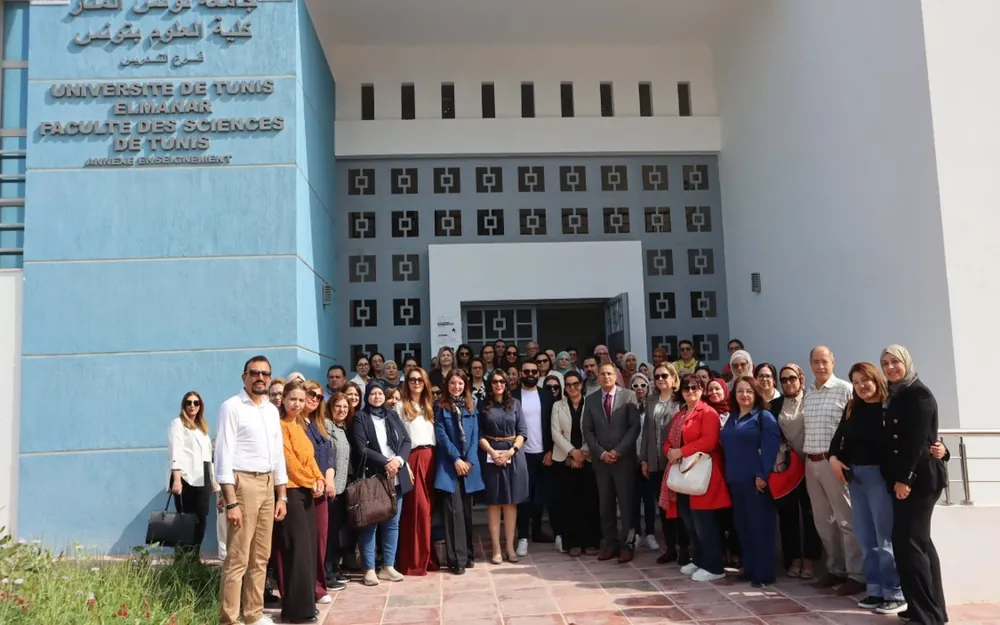
After an external audit, the Faculty of Economic Sciences and Management of Tunis (FSEGT) renewed its certification to ISO 21001:2018, the standard for management systems of educational organisations. The standard requires an institution to assess how well it meets the needs of learners and other beneficiaries and to improve their satisfaction continuously. The Faculty of Law and Political Science of Tunis (FDSPT) was awarded ISO 21001:2018 certification after an external audit of its education management system. UTM announced the result and stated that it reflects the faculty’s commitment to applying international quality standards in teaching and management. The faculty also published its signed quality policy on its website.
UTM renewed the ISO 9001:2015 certification of its quality management system after internal and external audits covering all of its services, which checked compliance with applicable procedures and the effectiveness of the system. An external evaluation committee approved the renewal. UTM credited its quality team, administrative and technical managers and staff, and presented the process as a way to strengthen a culture of quality and continuous improvement across its structures. In a radio interview, the UTM President, Prof. Moez Chafra, stated that 14 establishments attached to the university hold a quality certification, which he linked to the international recognition of degrees.
“Savoir Agir”: harmonised transversal modules for all UTM establishments
UTM trained pilot teachers from the nine establishments concerned in the transversal “Study Skills” modules of the re-habilitated bachelor’s programmes. The training was organised within the “Savoir Agir” project, with the Ministry of Higher Education and Scientific Research and the General Directorate of University Renovation (DGRU). The Faculty of Sciences of Tunis (FST) and the Preparatory Engineering Institute of El Manar (IPEIEM) then hosted a second training of trainers, held to harmonise the teaching of these units across UTM. The project team also met the quality referents of the establishments on the transversal modules of the new accredited programmes.
“Savoir Agir” is a Tunisian-French cooperation between the ministry, the Institut français de Tunisie and the French Embassy in Tunis. Among its four families of skills, study skills were introduced in a Tunisian university for the first time: two modules taught in the first year of the bachelor’s degree, in both semesters and in all disciplines, public and private. Soft skills follow in the second and third years. More than 1,300 teachers were trained through training sessions and workshops, and about 80,000 students were expected to benefit in the first year of the rollout. A digital platform was planned to monitor implementation and collect student feedback.
Pilot training of teachers for the “Savoir Agir” transversal modules · Photo: official UTM Facebook page
Prize for pedagogical innovation: the Jean Demal prize at ISTMT
Dr Sawssen Turki, assistant lecturer at the Higher Institute of Medical Technologies of Tunis (ISTMT), won the Jean Demal Prize for Educational Innovation, for her work on the integration of sustainability into engineering education. UTM announced the distinction in a communiqué and linked it to its priorities of educational innovation, graduate employability, volunteering, and scientific and societal impact, in line with SDG 4 on quality education. The same communiqué reported that Dr Nihel Ben Youssef, assistant lecturer at the Higher Institute of Computer Science, was named a finalist for the “Cybersecurity Woman of the Year – Volunteer of the Year” distinction, in recognition of her volunteer work and her contribution to the cybersecurity community.
Digital technologies in education: an accessibility study day and a training summit
The Faculty of Medicine of Tunis hosted a study day on communication and accessibility to knowledge through new technologies, coordinated by Dr Walid Zidi and Dr Hind Soudani with the Intersignes and ESLI research laboratories and the Ministry of Health. The UTM President, Prof. Moez Chafra, opened the day by arguing that learning and creativity are rights and that academia should be open to everyone. Samia Kassab-Charfi, director of the Intersignes laboratory, argued against a single rigid teaching model and proposed flexible deadlines and several formats for course content, such as audio generated by artificial intelligence, subtitles and transcripts.
Speakers from the Faculty of Medicine showed how digital tools support medical communication, telemedicine and therapeutic education, while Prof. Chiheb Romdhani, president of the faculty’s innovation committee, warned that new tools could create new forms of exclusion. Assistive technologies were presented, including screen readers, connected braille displays and visual recognition systems. Participants identified persistent gaps: physical inaccessibility of schools, unadapted teaching resources, overcrowded classes and school dropout. One speaker proposed replacing the term “specific needs” with “particular educational needs”, so that the system rather than the individual adapts.
UTM also organised the MENAFRICA Digital Summit at the National Engineering School of Tunis (ENIT), bringing together representatives of ministries, universities, experts and public and private actors to assess the state of digitalisation across sectors, share good practices and propose actions for an inclusive and sustainable digital transformation. Specialised training sessions ran in parallel on advanced digital skills, artificial intelligence, inclusion, collaboration and open education, large language models for software engineering, cybersecurity and data protection, blockchain and the metaverse.
Institut Pasteur de Tunis: an mRNA training course and academic agreements
The Institut Pasteur de Tunis (IPT) ran a two-day course entitled “mRNA Technology in Practice”, organised with its mRNA Technology Transfer Unit and limited to 20 participants. The course covered the whole development cycle of mRNA products, from formulation design to production of the final drug, together with manufacturing processes and analytical methods. It combined theory, practical work and a visit to the institute’s laboratories and research units, and it was taught by IPT researchers specialised in immunology, biotechnology and mRNA research. The institute presented the course as part of an effort to build national scientific skills in mRNA and its medical applications.
IPT also signed academic agreements with two UTM establishments. The agreement with the Higher Institute of Applied Biological Sciences of Tunis (ISSBAT), signed by the Director General of IPT and the Director of ISSBAT, renews and strengthens cooperation in scientific research, academic collaboration, and the training and supervision of students. The convention with the Faculty of Sciences of Tunis (FST), signed by the Director General of IPT and the Dean of FST, formalises an existing collaboration on scientific and academic exchanges, joint research projects, and the training of students and young researchers.
A digital library for law students
The PAQ-DGSE quality support project of the Faculty of Law and Political Science of Tunis (FDSPT) was closed. The project included the digitisation of part of the faculty’s library, books and theses, which brought a share of the collection into digital form. The faculty’s website also links students to an online catalogue of its library hosted on the Biruni platform.
Humanities, study-abroad information and student awareness at ISSHT
The Higher Institute of Human Sciences of Tunis (ISSHT) held a conference on languages and the humanities in the neoliberal university. The institute also organised an information session for students interested in studying abroad on the international scholarships offered by the Doha Institute, covering a presentation of the institute, the scholarships, the admission conditions and the selection criteria. The session took place in the institute’s thesis room.
UTM held its first awareness session on risky behaviour in university settings at ISSHT. The session addressed addiction in all its forms, dependence and the dangers of risky behaviour, particularly in the context of rapid digital transformation, and discussed prevention methods and the support and guidance mechanisms available in universities. Opening the session, the UTM President, Prof. Moez Chafra, argued that a balanced university environment goes beyond academic learning and also depends on psychological well-being and social and economic integration, and that academic success depends on students’ ability to manage daily pressures while avoiding behaviour that could hinder their progress.
Language courses and cooperation at IBLV
The UTM President visited the Bourguiba Institute of Living Languages (IBLV) at the start of the language courses, when students from the University of Oxford were learning Arabic at the institute. He also visited the institute’s renovated spaces and equipment. IBLV teaches Arabic, French, English, German, Spanish, Italian, Japanese, Chinese, Korean, Romanian, Russian and Turkish, and its annual Arabic course is organised in three sessions with intensive, semi-intensive and extensive weekly schedules.
IBLV also opened new in-person modules of 56 hours to improve French and English, addressed to students, high-school pupils, future bachelor’s degree holders, civil servants and teachers, with a limited number of places. The institute offered registration for the Japanese Language Proficiency Test, the official reference examination for Japanese, at its premises in Tunis, with online pre-registration open to candidates.
On the cooperation side, IBLV signed an agreement with the Higher Institute of Languages of Nabeul to make language learning accessible to everyone and to strengthen university partnerships. With KOICA Tunisia, it hosted a Korean culture day with a quiz, a cooking workshop, a traditional costume fitting and a tasting, attended by learners and KOICA volunteers. Its Languages department coordinator, Lamia Chourou, also presented the results of the KOICA–IBLV cooperation on the promotion of Korean language teaching at a meeting of KOICA’s institutional partners.
Orientation and support for new students at ENIT, FSEGT and ISSBAT
The National Engineering School of Tunis (ENIT) hosted a regional information day on university orientation for new baccalaureate holders. National information days on orientation were opened by the Minister of Higher Education and Scientific Research, Mondher Belaïd, who described orientation as a strategic decision shaping students’ academic and professional futures and stressed access to reliable information for all baccalaureate holders. He added that programmes were being revised in artificial intelligence, data analysis, cybersecurity, the green economy, renewable energy and creative industries.
The Faculty of Economic Sciences and Management of Tunis (FSEGT) organised an open day for new baccalaureate holders to guide their choice of university course. The faculty presented its bachelor’s and master’s degrees in economics, management, finance, accounting, marketing and information technology, with emphasis on the link between the programmes and the jobs and skills that employers seek. Visitors spoke directly with teachers and students, toured classrooms and teaching spaces, and received information on international mobility programmes, study-abroad options and support for entrepreneurship and project creation.
At the Higher Institute of Applied Biological Sciences of Tunis (ISSBAT), students can consult the institute’s psychologist, who is available every Tuesday throughout the academic year. The service offers a space to listen and support students facing stress, doubts, fatigue, concentration or learning difficulties, anxiety, relationship problems or discouragement, so that they do not have to go through difficult moments alone.
Student innovation and creativity: a hackathon and cooperation with an Arab council
UTM and the Office des Oeuvres Universitaires pour le Nord organised the student hackathon HacKa2’OOUN. Its first edition took place at the Cité des Sciences de Tunis with 60 students, on the theme of entrepreneurship and the creation of community enterprises in support of the Sustainable Development Goals. For the second edition, the UTM President, Prof. Moez Chafra, met the Director General of the Office to prepare the programme, the speakers, the partners and the logistics, and both sides stressed the need to mobilise as many students as possible around innovation and civic engagement.
The UTM President also met a delegation of the Arab Council for Training and Student Creativity, led by its director Fawaz Ahmed Zaghoul, to discuss cooperation programmes that help students take part in academic and creative activities. The Council, an academic body affiliated with the Union of Arab Universities, presented certificates of appreciation to Prof. Chafra, a board member of the Council, and to Monia Najjar, UTM Vice-President for international cooperation and a member of its executive committee.
Science Day at ENIT and national distinctions
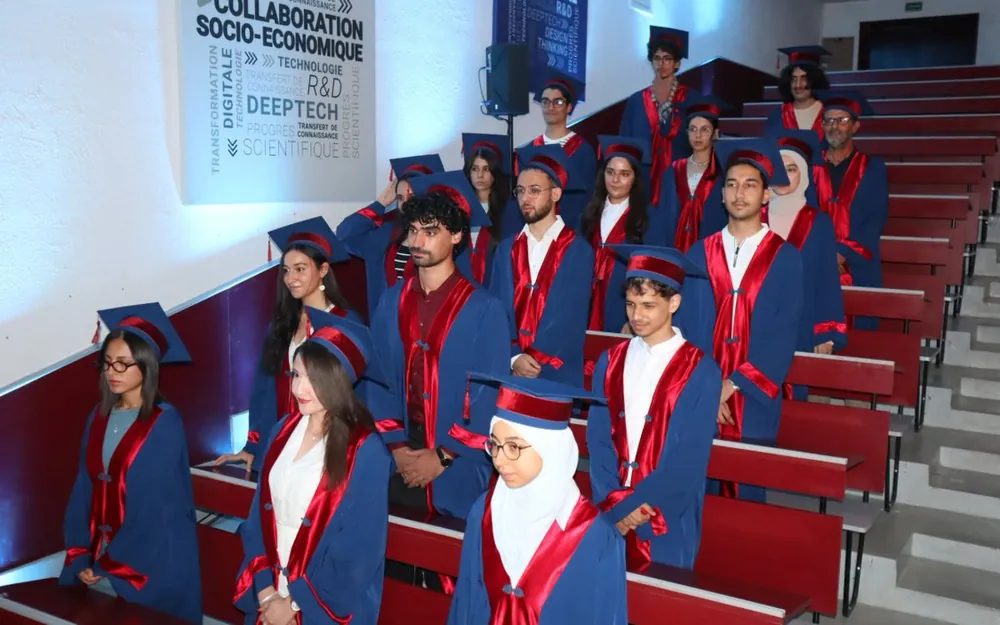
UTM held its Science Day ceremony at the National Engineering School of Tunis (ENIT), with the support of the Banque Nationale Agricole and the Caisse des Dépôts et Consignations. The ceremony honoured top bachelor’s students, staff and outstanding student clubs. The Arab League Educational, Cultural and Scientific Organization (ALECSO) took part, represented by Dr Manar Amer, an expert in its Department of Science and Scientific Research, and described the day as one of the university’s most important academic events, at which the best students are recognised for academic excellence.
On the national Science Day at Carthage Palace, UTM students and staff received national distinctions. The decree on the National Order of Merit in the education and science sector lists the UTM President, Prof. Moez Chafra, and Prof. Youssef Ben Othman among its recipients, and Prof. Ben Othman was also appointed to the Higher Council for Education. Fares Labed, a student of the Preparatory Engineering Institute of El Manar (IPEIEM), received the President of the Republic Prize.
The National Engineering School of Tunis (ENIT) celebrated the centenary of the birth of Prof. Mokhtar Laatiri, founder and first director of the school, which was the first engineering school in Tunisia. A workshop on the future of the engineering profession accompanied the ceremony. The celebration coincided with the fiftieth anniversary of ADENIT, the association of ENIT graduates, which counts about 15,000 graduates in Tunisia and abroad. Its president, Mourad Mastour, described Laatiri as the spiritual father of the Tunisian engineer, and press coverage recalled that Tunisia had only 31 engineers at independence. A survey by the association found that many engineers under thirty did not recognise his name. The celebrations began on World Engineers’ Day with an evening organised with the Order of Engineers and ENIT.
Study opportunities in Romania
The Faculty of Economic Sciences and Management of Tunis (FSEGT) and the Faculty of Law and Political Science of Tunis (FDSPT) welcomed the Ambassador of Romania to Tunisia, Valentin-Ciprian Muntean, for a presentation of study opportunities in Romanian universities. At national level, Tunisia was guest of honour at an international university festival in Bucharest, where 30 memoranda of understanding were signed between Tunisian and Romanian universities, with partners that included the Politehnica University of Bucharest and the University of Agronomic Sciences and Veterinary Medicine of Bucharest. Romania also agreed to double the number of university scholarships offered to Tunisian students, from 10 to 20 per year, following a bilateral higher-education and research programme between the two countries.
Conference of Arab admission and registration officers
UTM and the University of Carthage organised, in Hammamet, the 42nd conference of the Arab Organization of Admission and Registration Officers (ARAB-ACRAO), under the patronage of the Ministry of Higher Education and Scientific Research and within the Association of Arab Universities. Experts from 18 countries took part. The theme was the role of admission and registration in improving the global standing of universities, and it was the second time that Tunisia hosted the event.
The programme was organised around six axes: attracting talented students through targeted admission policies, digital transformation of administrative processes, the link between academic quality and admission procedures, internationalisation of institutions, internal audit of admission and registration processes, and the challenges of visibility in global rankings. The conference aimed to strengthen cooperation among Arab universities by sharing good practices, to support the transparency, efficiency and attractiveness of Arab university systems, especially for international students, and to support accreditation and visibility efforts.
Closing ceremony of the Dirasa project
The Erasmus+ project “Dirasa”, in which UTM is a consortium member, held its final conference and closing ceremony at the Cité de la Culture in Tunis, under the Ministry of Higher Education and Scientific Research. A final meeting of the partners followed. Dirasa was a three-year Erasmus+ capacity-building project on research governance in Tunisia. Its activities included benchmarking of research and innovation governance, workshops in Tunisia, training weeks in Palermo and Djerba, study visits to Pavia, Pisa and Rouen, and cascade training sessions for academic and administrative staff. Its results included an overview of research governance in Tunisia, institutional action plans for strategic monitoring, a model performance contract between supervisory authorities, universities and research structures, scientific interest groups and a national coordination network. The University of Pisa was among the European partners.
Joint degrees and exchange agreements with France, Japan, China and Oman
The National Engineering School of Tunis (ENIT), UTM and the French consulate renewed the double-degree partnership with ENSTA Paris. The agreement was signed by the Consul General of France in Tunis, Dominique Mas, the UTM President, Prof. Moez Chafra, and the Director General of ENIT, Kamel Ben Saad. It concerns ENIT’s Advanced Techniques engineering track, which alternates academic modules in Tunisia with technical internships in France and leads to a diploma co-signed by ENIT and ENSTA Paris. The Institut français de Tunisie and Campus France provide mobility scholarships and support with relocation, visas and internships. The renewal runs for two years, and the partners intend to extend it to joint research and co-supervised doctorates in artificial intelligence and digital transition.
UTM and the University of Electro-Communications in Japan signed an agreement creating the first joint professional doctorate between Tunisia and Japan, in electronic communications and industrial engineering. Each doctoral student works with a partner company, which supports applied research and technology transfer. The signing took place in the presence of the Director of ENIT, the director of the doctoral school, the Dean of the Faculty of Sciences and the Ambassador of Japan to Tunisia, Takeshi Osuga. Hiroshima University also signed an agreement with UTM, on the sidelines of a university presidents’ conference on peace, covering research, student exchanges, joint supervision of doctoral theses, joint scientific events and mobility of teacher-researchers.
UTM signed a cooperation agreement with Beijing Foreign Studies University during a working session chaired by the UTM President with a Chinese delegation that included the university’s vice-president. It covers exchanges of students, teachers and staff, joint projects, scientific conferences and co-supervised research, and aims to widen UTM’s network of partners across five continents. UTM also signed a memorandum of understanding with the National University of Science and Technology of Oman, in an online meeting between the two presidents, setting five years of academic cooperation in scientific research, exchange of expertise and training in health, science and technology.
Take the SDG 4 report with you
The 2026 report for SDG 4 is a 11-page brochure with every activity and photograph from this page.