The University of Tunis El Manar (UTM) worked on gender equality mainly through WE4LEAD, an Erasmus+ project that supports gender equality plans, parity units and training on leadership and harassment in Mediterranean universities. UTM and its establishments also took part in events on women in mathematics and women’s rights, published equality and parental-leave policies, hosted student initiatives for women in engineering, and put forward women academics and researchers who received national and international distinctions.
Parity and Respect Cell opens a confidential listening service
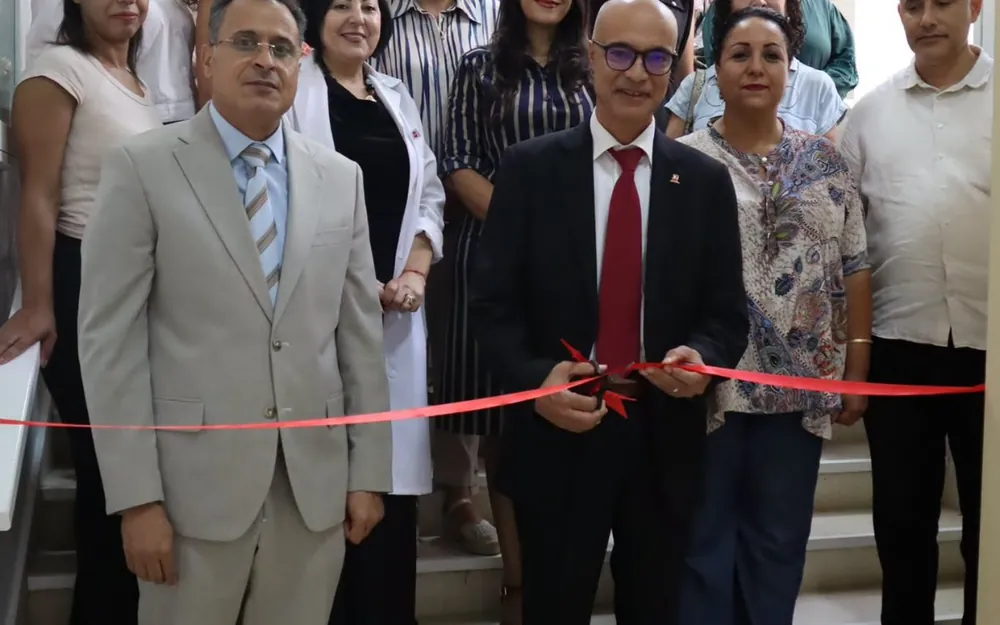
UTM inaugurated the premises of the Cellule pour la Parité et le Respect (Parity and Respect Cell) at the Tawhida Ben Cheikh University Medical Centre, within the WE4LEAD project. The cell works to prevent all forms of violence and offers listening to students and staff facing psychological difficulties, verbal violence, racism or gender-based discrimination. The inauguration brought together vice-presidents of UTM, members of the cell, the Dean of the Faculty of Sciences of Tunis (FST), the director of the Higher Institute of Applied Biological Sciences of Tunis (ISSBAT) and university psychologists.
UTM’s president, Moez Chafra, presented the cell as a pilot service on national radio. He described a procedure in which the cell listens to students, examines their difficulties, directs them to suitable solutions and follows each case, and he stressed confidentiality. According to his description, the cell includes university psychologists, psychiatrist teachers of the Faculty of Medicine of Tunis and teachers of the psychology department of the Higher Institute of Human Sciences of Tunis. It was created by the University Council and forms part of an international project with institutions in France, Italy, Lebanon and Algeria. Students are the priority group of the cell, and teachers and administrative staff can also use it.
Tethys General Assembly and WE4LEAD coordination meeting in Marseille
UTM took part in the general assembly of the Téthys network of Euro-Mediterranean universities, hosted by Aix-Marseille Université. The university was represented by its president, Moez Chafra, and by Halima Ouanada, scientific coordinator of the WE4LEAD project. The assembly gathered about 120 participants from 22 universities in 11 countries, and gender equality and adaptation to climate change were among the shared priorities discussed by the network.
The ninth WE4LEAD coordination meeting followed at the same university, with about fifteen academic and administrative partners on site and about ten online. It opened with a meeting of the presidents of the partner universities. Moez Chafra stated his intention to bring the proposals of the project to the thirteen public universities of Tunisia and to promote the creation of gender-parity units, starting with UTM.
WE4LEAD drafting committee for the UTM Gender Equality Plan and training days
The WE4LEAD team of UTM met as a drafting committee for the university’s Gender Equality Plan (Plan Égalité Femme-Homme), together with partners that have signed conventions with the university. The work follows the approach of the project, which supports each partner university in drafting a gender equality plan, in collecting and analysing gender-disaggregated data and in opening an institutional parity unit.
The WE4LEAD team of UTM also held two training days for key actors of higher education. The first was titled “Gender and Leadership” and the second “Harassment in the university: means and tools of protection”. Both activities were co-funded by the European Union and correspond to the training lines of the project on inclusive leadership and on the prevention and handling of sexual harassment.
Equality, diversity, inclusion and equity policy
UTM’s policy on equality, diversity, inclusion and equity states that every member of the university community shares responsibility for an inclusive environment. It commits the university to eliminating unlawful discrimination, harassment and victimisation, to advancing equality of opportunity and to fostering good relations between groups, and it refers to the Tunisian higher-education law. The policy covers students, academic and research staff, administrative employees and visitors. Selection panels receive bias-awareness training, and admissions and scholarships follow transparent criteria that give priority to academic merit and social equity.
A section on gender equality and women’s empowerment states that UTM promotes the participation of women in academic and administrative leadership, that several faculties have gender-balanced governance and that mentoring programmes connect younger women academics with senior mentors. It describes a zero-tolerance approach to gender-based violence and harassment, with confidential reporting mechanisms, psychological support and awareness campaigns. The equity and inclusion team of the Sustainable Impact Office collects data and reports annually on gender representation, accessibility measures and diversity outcomes.
Maternity and paternity leave policy for UTM staff
UTM adopted a policy on maternity and paternity leave for biological, adoptive and surrogate parents, in line with Tunisian labour law. Under the policy, female employees with at least six months of continuous service are entitled to 110 days of fully paid maternity leave, which can be extended on medical grounds, and they can apply for up to six months of unpaid parental leave afterwards. Reinstatement in the same or an equivalent post is guaranteed on return.
Male employees with the same length of service are entitled to 15 days of fully paid paternity leave and can request up to three months of unpaid parental leave, subject to departmental approval. Adoptive and surrogate parents receive the same entitlements. Requests are submitted in writing to the head of department 30 days before the expected date, except in emergencies, with a medical certificate or adoption papers attached. The equality policy of UTM links these provisions to the PAQ GAGE and WE4LEAD projects and to flexible working hours, telework and childcare support.
WE4LEAD coordination meeting hosted by UTM in Tunis
UTM hosted a coordination meeting of the WE4LEAD project in Tunis, with partner universities from Algeria, France, Italy, Lebanon, Spain and Tunisia. The meeting aimed to finalise the partners’ methods for drafting a strategic plan and gave an overview of the objectives and deliverables of the next phase. The agenda covered activity management and coordination, quality assurance of deliverables, evaluation of project data, anti-harassment measures, communication and awareness strategies, training programmes, and plans for disseminating and exploiting results.
WE4LEAD is an Erasmus+ Capacity Building in Higher Education project, coordinated by Aix-Marseille Université and the Lebanese University, that aims to increase women’s access to the highest decision-making positions and to promote inclusive governance in higher education institutions of the Mediterranean region. Its Tunisian partners are UTM and the University of Sousse.
WE4LEAD coordination meeting at Sapienza Università di Roma
UTM took part in a WE4LEAD coordination meeting hosted by Sapienza Università di Roma, together with other universities of the Téthys network. The discussions addressed four lines of work for breaking the glass ceiling in higher education: collecting gender-disaggregated data to understand the situation, creating awareness-raising tools, setting up gender equality plans for women and men, and fighting harassment through dedicated listening units. The meeting prepared the closing conference of the project, held at Aix-Marseille Université.
WE4LEAD open online course built by the partner universities
Teaching and research teams of the nine WE4LEAD partner universities, including UTM, designed and developed an open online course on promoting women’s access to positions of responsibility. The course is organised in five thematic sections of two to three chapters each and lasts about three hours, with videos, written material, animated introductions and multiple-choice questions. Its topics are the collection and analysis of gendered data, the drafting and monitoring of a gender equality plan, recruitment without gender stereotypes and the setting up of sexual harassment hotlines.
The course is open to people of all genders, including students, academic staff, administrative staff and management teams, with no prerequisite. Registration runs through the platform of France Université Numérique, which issues a badge to participants who complete the whole course. The Réseau Francophone des Femmes Responsables dans l’Enseignement Supérieur et la Recherche (RESUFF), an associate partner of the project, supported the work.
WE4LEAD final conference in Marseille and launch of Women Leading Change
The delegations of UTM and the University of Sousse joined partners from Algeria, Lebanon, Spain, France and Italy at Aix-Marseille Université, on the Pharo campus, for the final conference of WE4LEAD, the Erasmus+ project that ran for more than three years. The conference addressed the promotion of women’s access to leadership positions in Euro-Mediterranean universities, and the programme provided for the presence of the presidents and rectors of the Lebanese and Tunisian partner universities.
On the first day the partners presented the results of the project: the collection of gender data, awareness methods for university leaders, institutional frameworks, training for inclusive governance, anti-harassment mechanisms and dissemination tools. The second day dealt with sustainability, the WE4LEAD open online course and public policies. Presidents, rectors and representatives of the partners committed to embedding gender equality in institutional policy, including gender-disaggregated data, training for gender-neutral recruitment and promotion, mentorship, and prevention of harassment with support units. The event also launched Women Leading Change, a project of the Union for the Mediterranean that transfers the WE4LEAD methodology to ten universities of Lebanon, Morocco and Syria and their partner municipalities.
UTM professor leads the harassment session at a Union for the Mediterranean training
Prof. Lilia Othman Challougui of UTM led the session on preventing and addressing sexual harassment in academic institutions during the capacity-building programme on gender-responsive leadership of the Union for the Mediterranean (UfM), held at the UfM headquarters in Barcelona. The programme belongs to the Women Leading Change project, supported by the Catalan Development Cooperation Agency, and was delivered by a consortium led by the Lebanese University. Its participants were thirteen tandems of universities and municipalities from Morocco, Lebanon and Syria.
The session discussed the forms of harassment, the responsibilities of institutions and the need for robust prevention and response mechanisms. The same day began with a workshop on gender and leadership led by Prof. Boutheina Ben Hassine of the University of Sousse, and the second day included a workshop on recruitment without gender stereotypes led by Prof. Isabelle Régner of Aix-Marseille Université. Women Leading Change builds on the methods and tools of WE4LEAD, in which UTM is a partner.
UTM at the International Conference on Gender Studies in Madrid
A UTM delegation took part, within the WE4LEAD project, in the third International Conference on Gender Studies (ICGS), held at the Universidad Autónoma de Madrid on the theme “Gender and Leadership in Academia”. The delegation comprised Halima Ouanada, scientific coordinator of the project, and the team members Hajer Chaker and Nejiba El Yetim.
The contribution of UTM included the moderation of a panel, a talk and active participation in a workshop on gender-disaggregated data. The talk was titled “Widespread Presence, Limited Power: Women in Tunisian Higher Education and the Glass Ceiling”. According to UTM, the participation was well received for its relevance and increased the university’s international visibility in gender studies.
African Women in Mathematics conference with UTM academics
The conference “African Women in Mathematics: Challenging Questions” was held in Hammamet over three days and brought together African mathematicians. Its objectives were to network African mathematicians, to start cross-border research collaborations, to create mentoring networks for young women, to teach programming and to contribute to the SageMath software. The African Women in Mathematics Association (AWMA) also planned its general assembly during the event, and the Tunisian Women Mathematicians’ Association (TWMA) appears among the collaborating organisations listed for the conference.
UTM was involved in several ways. Zeineb Ghardallou, Marwa Khalil and Rawdha Laffi, affiliated with UTM, sat on the local organising committee. Prof. Nahla Abdellatif of UTM gave a lecture on a food-web model in a chemostat, and Halima Ouanada presented the WE4LEAD project and its work on women’s empowerment and leadership in higher education. A panel discussion examined the main challenges of African mathematics and of women in mathematics, and the programme included a talk on gender equality and leadership at the University of Sousse.
SULIEIA: women’s rights in the Mediterranean and gender-equality training for doctoral students
UTM and the University of Naples Federico II, which coordinates the SULIEIA project, organised an international workshop titled “Women’s rights in the Mediterranean: legal frameworks and social reality”. The workshop was held at the Naples university, and doctoral students could follow it remotely through an online form and earn three training credits, while teaching staff and researchers registered on the project platform. Researchers of the Faculty of Law and Political Science of Tunis (FDSPT), Zeineb Essid, Olfa Triki, Rim Gaiji and Imen Abdelhak, took part in the hybrid workshop.
SULIEIA (Supporting Universities in digital transition, educational Innovation and environment protection fostering the Launch of Italian Educational Institutions Abroad) gathers more than thirty partner universities from the southern Mediterranean shore and the Western Balkans. One of its work packages is devoted entirely to gender equality and to the rights and well-being of people of all genders, with training on the development, implementation, monitoring and revision of gender equality plans. In another activity of the project, the doctoral school of the FDSPT held a workshop at the Faculty of Economic Sciences and Management of Tunis (FSEGT) on training and cooperation activities on gender equality.
Prof. Asma Gati featured as Immunologist of the Month
The Immunopaedia website featured Prof. Asma Gati, Vice-President for Research of UTM, in its Immunologist of the Month series. The interview presents her as a professor of immunology who leads the Genetics, Immunology and Human Pathologies laboratory at the Faculty of Sciences of Tunis. Her work centres on the interactions between the immune system and cancer, including the tumour microenvironment and natural and synthetic bioactive molecules as adjuvants of antitumour immunity.
The profile also records her national and international roles: Tunisian National Contact Point for the European Innovation Council under Horizon Europe, North Africa Representative in the Federation of African Immunological Societies and Treasurer of the Tunisian Society of Immunology. In the interview she encourages early-career scientists to remain curious and resilient, to build networks and to seek diverse mentorship, and she describes the mentoring of young scientists as rewarding, especially when mentees become independent researchers.
Women academics and researchers of UTM honoured nationally and internationally
UTM announced that Dr Sawssen Turki, assistant professor at the Higher Institute of Medical Technologies of Tunis (ISTMT), won the Prix Jean Demal for pedagogical innovation, in recognition of innovative teaching that includes the integration of sustainability into engineering training. The announcement also named Dr Nihel Ben Youssef, assistant professor at the Higher Institute of Computer Science (ISI), as a finalist for Cybersecurity Woman of the Year in the Volunteer of the Year category, for her volunteer commitment and her contribution to developing the cybersecurity community.
Dr Samra Badrouchi, hospital-university assistant in nephrology at the Faculty of Medicine of Tunis and Charles Nicolle Hospital, received the Gordon Williams Gold Medal Award at Harvard Medical School after completing the Master of Medical Sciences in Clinical Investigation. The medal recognises academic excellence and contribution to clinical research within the graduating class. Dr Olfa Messaoud, a researcher of the Laboratory of Biomedical Genomics and Oncogenetics at the Institut Pasteur de Tunis, completed the same programme, and both researchers had obtained the Hazem Ben Gacem scholarship.
Two women of UTM establishments were also among the five laureates of the Tunisian Women in Tech distinction, awarded by the association Reconnect to recognise women’s excellence in science, technology, engineering and mathematics. They are Lilia Zakhama, professor of cardiology and vice-dean of the Faculty of Medicine of Tunis, and Rym Kef Ben Atig, associate professor at the Institut Pasteur de Tunis who specialises in biomedical genomics and oncogenetics. The selection criteria included the excellence of the career, the impact of scientific work and the commitment to innovation and skills transfer.
Women leaders of UTM recognised for leadership and networking
Prof. Nesrine Zoghlami, Vice-President of UTM, was named “Lady of the Month” by the Sayidat al-Ardh foundation, in recognition of women’s leadership. The ceremony took place at the headquarters of UTM. Prof. Hanene Boussi, Vice-President of UTM in charge of Sustainable Impact and Rankings, is a fellow of the international Women in STEM Network. Her activity centres on building professional networks and organising conferences that bring together academics, industry representatives and policymakers, with the aim of increasing the visibility of women in science and technology in Tunisia and internationally.
IEEE Women in Engineering national congress organised by the ENIT student branch
The IEEE ENIT Student Branch of the National Engineering School of Tunis (ENIT), with the IEEE Women in Engineering (WIE) ENIT Affinity Group and the IEEE WIE Tunisia Section, organised the IEEE WIE Annual Congress of Tunisia in Hammamet. The congress, themed “Agri-WIE: Empowering Women in the Green Revolution”, gathered more than 370 attendees representing 37 WIE student affinity groups, out of more than 3,000 WIE members in Tunisia.
The programme combined an opening ceremony, booth exhibitions and networking, pitch challenges, a technical workshop on smart agriculture for rural women in Tunisia with AI-driven approaches, and a mentorship programme with roundtables on innovation, sustainability and entrepreneurship. A track of IEEE WIE Region 8 addressed leadership and the future of women in engineering, and the finalists of the challenges were announced before the closing ceremony.
Childcare arrangements for staff and student-parents
The childcare overview of UTM describes a two-layer arrangement. The first layer is a campus-linked facility, the nursery associated with Charles Nicolle University Hospital, which serves hospital staff, residents, researchers and student-parents whose clinical schedules include early mornings, long shifts and rotations. The second is the dense network of private nurseries around the El Manar campus, which many families affiliated with UTM use rather than commuting across the city.
The overview presents childcare as part of university infrastructure, with the stated aim that parents remain fully part of the university community. It notes that nurseries in Tunisia are regulated by the state, with the Ministry of Women, Family, Childhood and Seniors publishing lists of authorised establishments, and it states that UTM maintains a constructive relationship with the Ministry. The equality policy of UTM lists on-campus childcare support among its family-friendly measures.
Two WE4LEAD agreements for women researchers
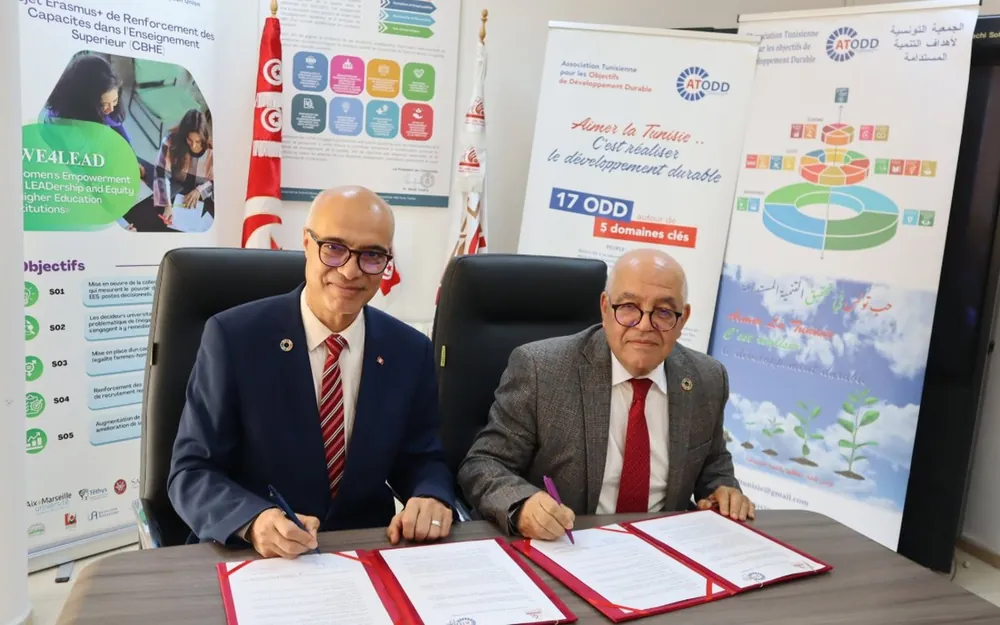
UTM signed two cooperation agreements, as an output of WE4LEAD, with the Association des Femmes Tunisiennes Mathématiciennes, known in English as the Tunisian Women Mathematicians’ Association (TWMA), chaired by Selma Negzaoui, and with the Association Tunisienne pour les ODD (ATODD), chaired by Nejib Boulaares.
The agreements aim to strengthen the capacity of women researchers through training, publishing support and conferences. TWMA gathers Tunisian women who hold a doctorate in mathematics and appears among the collaborating organisations of the African Women in Mathematics conference, in which UTM academics sat on the local organising committee.
Gender equality in global citizenship education and digital doctoral training
A representative of UTM took part in the ninth Global Capacity-Building Workshop on Global Citizenship Education (GCED), organised online by the Asia-Pacific Centre of Education for International Understanding (APCEIU) for 49 educators from 28 countries. The workshop aimed to empower educators for a culture of peace, and UTM presented its participation as a contribution to gender-sensitive education.
A lecture titled “Gender Equality and Global Citizenship in the Digital Age” was delivered at the summer school of the RAQMYAT project, “Digital Strategies for Doctoral Training in Humanities and Social Sciences in Tunisia”, held at the University of Vienna. The audience consisted of university representatives, researchers and doctoral students from Tunisian and European universities, and the lecture addressed gender inclusivity in digital doctoral training.
Take the SDG 5 report with you
The 2026 report for SDG 5 is a 9-page brochure with every activity and photograph from this page.