reduce inequality within
and among countries
The University of Tunis El Manar (UTM) has launched the Inclusive University Project, which seeks to foster an equitable and inclusive learning environment while strengthening diversity, inclusion, and anti-discrimination policies across all institutional levels.
As part of this initiative, UTM has established several dedicated structures, including the Inclusion and Diversity Office, led by Mrs. Aicha Maui, and the Learning Difficulties and Disabilities Office, directed by Mrs. Imen Ellousi. These efforts are supported by the Communication and Media Department, headed by Mrs. Ahlem Turki, which collaborates with other university units to promote inclusion through media engagement and awareness campaigns.
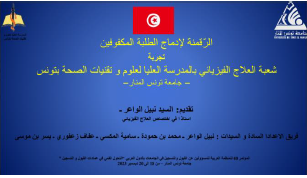
UTM stands as a national pioneer in inclusive higher education, being the only university in Tunisia to offer two specialized academic programs designed for students with learning difficulties. The first is a Bachelor’s degree in Physiotherapy for visually impaired students, taught at the Higher School of Health Sciences and Technologies of Tunis by faculty members that include visually impaired and blind professors. The second is a Bachelor’s degree in Sign Language offered by the Higher Institute of Human Sciences of Tunis, promoting Sign Language as a tool for communication and social inclusion.
Together, these initiatives underscore UTM’s deep commitment to advancing equity, accessibility, and diversity across its academic and administrative structures.
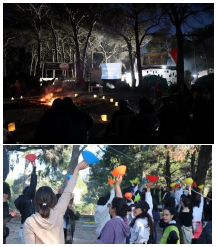
The UTM Without Obstacles Festival is a flagship initiative dedicated to promoting the inclusion and integration of students with learning difficulties and disabilities. This event features a sports festival specifically designed for students with disabilities, offering them the opportunity to engage in athletic activities within an accessible, supportive, and empowering environment. Beyond sports, the festival encompasses a variety of cultural, educational, and knowledge-sharing activities that encourage interaction, mutual understanding, and collaboration among all students. The event is organized in partnership with numerous NGOs and national as well as international stakeholders, whose joint efforts contribute to its success. Through this initiative, the University of Tunis El Manar (UTM) reaffirms its commitment to fostering an inclusive academic community—one where every student, regardless of ability, is given the opportunity to participate, succeed, and contribute meaningfully to university life.
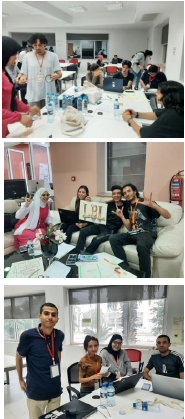
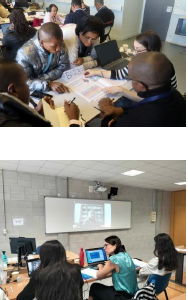
The UTM Handi-Kathon Competition is an innovative initiative designed to empower students with disabilities and learning difficulties by fostering creativity, innovation, and entrepreneurial thinking. This competition provides a dedicated platform for participants to design and present impactful projects—ranging from mobile applications to IoT-based devices—aimed at improving accessibility and enhancing the independence of individuals with disabilities. Among the most notable projects were smart glasses for the visually impaired and other pioneering assistive technologies developed by multidisciplinary student teams. The competition’s jury, composed of experts from socio-economic and industrial sectors, evaluated the projects based on their innovation potential, social impact, and feasibility. The UTM Hub for Student Entrepreneurship, directed by Dr. Mount Marrakchi, played a pivotal role by providing mentorship, guidance, and technical support to the participants throughout the process. Through this initiative, the University of Tunis El Manar (UTM) reaffirms its dedication to inclusive innovation and entrepreneurship, ensuring that all students—regardless of ability—can contribute to shaping a more equitable and accessible future.
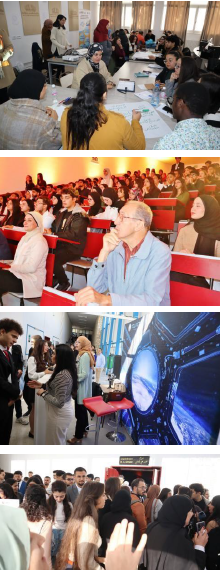
The International Students Integration and Music Festivals at the University of Tunis El Manar (UTM) serve as vibrant platforms celebrating artistic expression, cultural diversity, and social inclusion. Held annually as part of the UTM International and Regional Student Integration Program, these events showcase students’ creative talents through music, art exhibitions, and live performances, reflecting the richness of their diverse cultural backgrounds. In line with its strong commitment to inclusivity, UTM actively engages international students in the university’s governance and community life. Dedicated meetings are organized—particularly with students from Sub-Saharan Africa—to address migration-related challenges, encourage dialogue, and strengthen mutual understanding. These discussions provide valuable insights that inform UTM’s Migrants Projects and broader inclusion initiatives. Through these actions, the University of Tunis El Manar reaffirms its position as a welcoming, inclusive, and culturally dynamic institution—one that values diversity as a cornerstone of academic excellence and social cohesion.
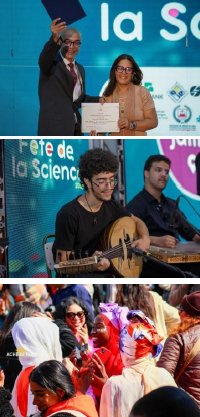
The International Students Integration and Music Festivals at the University of Tunis El Manar (UTM) serve as vibrant platforms celebrating artistic expression, cultural diversity, and social inclusion. Held annually as part of the UTM International and Regional Student Integration Program, these events showcase students’ creative talents through music, art exhibitions, and live performances, reflecting the richness of their diverse cultural backgrounds. In line with its strong commitment to inclusivity, UTM actively engages international students in the university’s governance and community life. Dedicated meetings are organized—particularly with students from Sub-Saharan Africa—to address migration-related challenges, encourage dialogue, and strengthen mutual understanding. These discussions provide valuable insights that inform UTM’s Migrants Projects and broader inclusion initiatives. Through these actions, the University of Tunis El Manar reaffirms its position as a welcoming, inclusive, and culturally dynamic institution—one that values diversity as a cornerstone of academic excellence and social cohesion.
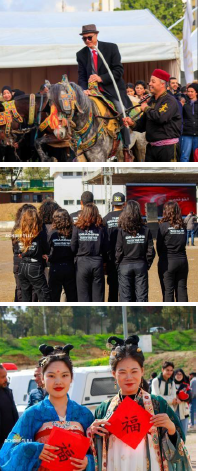
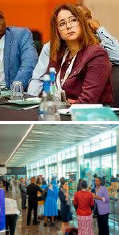
The UTM Culture and Diversity Beacon Festival is an annual celebration of tolerance, inclusivity, and cultural diversity within the University of Tunis El Manar (UTM) community. The festival brings together students, faculty, and staff from a wide range of backgrounds — including participants from multiple continents — to share experiences and explore global traditions. The event features exhibitions of traditional crafts, books, magazines, and culinary specialties, alongside a vibrant fashion show highlighting traditional attire from diverse cultures. By showcasing the rich heritage of participants from Africa, Europe, Asia, and beyond, the festival fosters connection, mutual respect, and intercultural understanding. Through this initiative, UTM reaffirms its role as a beacon of inclusivity and unity, promoting dialogue and celebrating diversity as a source of strength and shared identity within the university community.
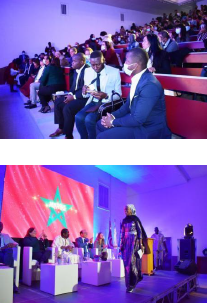
The Migrants Project, in which the University of Tunis El Manar (UTM) plays an active role, is a cornerstone initiative supporting the integration of international students and addressing the broader challenges faced by migrant communities. Through this project, UTM provides platforms for dialogue and exchange, ensuring that migrant students’ voices are heard and their concerns acknowledged. As part of its commitment, the university also offers an International Master’s Program in Migration Studies, designed to equip students with the analytical tools and practical skills necessary to engage with migration-related issues at local, regional, and global levels. This initiative reflects UTM’s dedication to academic excellence, social inclusion, and intercultural understanding, positioning the university as a leader in promoting diversity and supporting migrant communities within the higher education landscape.
The AFRIDI Project is a continental initiative that promotes research collaboration and academic mobility within Africa through exchange scholarships for students and researchers. Its core mission is to enhance cross-cultural learning, strengthen inter-university research networks, and foster a spirit of cooperation among African higher education institutions. By providing scholarship opportunities, the project enables students to gain international academic exposure, engage in collaborative research, and contribute to the advancement of scientific and societal knowledge across diverse disciplines. Through these efforts, the AFRIDI Project acts as a catalyst for academic excellence, innovation, and capacity building, empowering the next generation of African scholars to lead the continent’s sustainable development through research and collaboration.
The DIGITAFRICA Project, coordinated by the University of Tunis El Manar (UTM) with the technical support of the University of Côte d’Azur (France), is a flagship initiative aimed at advancing digitalization within African higher education systems. This collaborative effort brings together African and European universities to strengthen digital competencies, innovation capacity, and infrastructure across the continent. The project’s key objectives include promoting virtual student exchanges to foster knowledge sharing and cross-cultural collaboration among African students, as well as organizing mini-challenges on digital transformation that encourage participants to develop innovative and practical digital solutions. Through these initiatives, DIGITAFRICA enhances academic cooperation, builds a resilient digital learning ecosystem, and empowers the next generation of students and educators to lead Africa’s digital transition with creativity, inclusiveness, and sustainability.
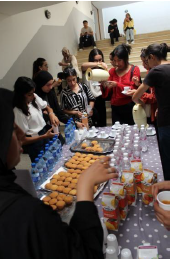
Each year, the Higher Institute of Medical Technology of Tunis (ISTMT) comes alive with the Big Snack Event, a vibrant celebration of Tunisia’s culinary diversity and cultural identity. Students from across the country gather to share traditional dishes from their home regions, transforming the event into a flavorful journey through Tunisia’s rich gastronomic heritage. Visitors enjoy a wide range of regional specialties—from breakfast dishes and scubas to rafissa, mlaoui bread, and locally crafted olive oil—as well as honey, pastries, fruits, and other artisanal products that reflect local traditions and know-how. More than a food exhibition, the Big Snack Event embodies community spirit, cultural pride, and dialogue through cuisine, creating an inclusive space where students connect, exchange stories, and celebrate Tunisia’s shared yet diverse heritage.
Under the leadership of Professor Moez Chafra, President of the University of Tunis El Manar (UTM), and Dr. Hanene Boussi, head of the Sustainability Impact Team, the university has developed the UTM Sustainability and Governance Framework. This framework integrates comprehensive diversity, inclusion, and sustainability policies to ensure that UTM remains a model of environmental responsibility, social equity, and institutional integrity. Regularly reviewed and updated by the leaders of various sustainability initiatives—including Erasmus+ projects and the Inclusive University Project—the framework adapts to emerging challenges and evolving societal needs. Through this proactive approach, UTM guarantees that its governance and sustainability strategies remain dynamic, effective, and aligned with international best practices, reinforcing its commitment to a fair, inclusive, and sustainable academic environment.
Case Study: The Physiotherapy Department at the Higher School of Health Sciences and Technologies, Tunis
The school was founded in December 1989. The physiotherapy program for visually impaired and blind students was established in 1965 through Tunisian-Belgian cooperation in Sousse. It moved to Tunis in 1982 and was integrated into the Higher School in 1989.
Specialized Teaching Framework
- A team of 9 specialized instructors (3 of whom are visually impaired) teaches and assesses professional skills according to the training program.
Student Profile & Motivation
Students are motivated to join primarily due to difficulties with professional integration in other fields. They consist of:
- Visually impaired Tunisian high school graduates directed to unsuitable university programs.
- Students seeking reintegration after acquiring a visual impairment during or after their studies.
- International visually impaired students whose home countries lack suitable adapted physiotherapy programs.
Key Conclusions from the Experience
- Digital tools and modern technologies are essential for ensuring training quality and facilitating professional integration.
- Inclusive education is a responsibility of academic institutions; non-exclusion and equal opportunity are foundations of sustainable development and educational quality.
Identified Weaknesses in the Current Situation
- Delays in the academic year start due to lengthy paper-based administrative procedures.
- Use of learning spaces not adapted to students’ needs.
- These students represent only 2.5% of the total student body, raising questions about the priority given to improving their training conditions.
Recommendations for Improving Training Quality
- Administrative & Digital Processes:
- Simplify and digitize the application file submission process.
- Set a firm end-of-August deadline for entrance exams.
- Adapt online registration platforms for the blind/visually impaired (e.g., eliminate the need to scan/upload paper documents and avoid CAPTCHAs).
- Develop or redevelop websites (for registration, the institution, student services) according to web accessibility standards (WCAG).
- Academic & Infrastructure Adaptations:
- Provide a digital library.
- Adapt training spaces (sound insulation, lighting control, reduced mobility risks).
- Enhance 3D models and tactile teaching aids.
- Provide Braille display devices.
- Foster partnerships with universities specialized in digitalization to utilize relevant student projects or research.