make cities and human settlements inclusive
safe, resilient, and sustainable
Pr.Jamel Neji, UTM,SDG 11 Ambassador

The University of Tunis El Manar: Advancing Sustainability through Education and Innovation
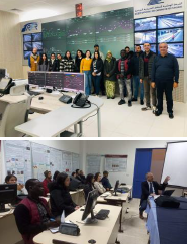
The University of Tunis El Manar (UTM) embodies the vision of a sustainable university within a sustainable city. As part of the Med-EcoSuRe project, UTM, through its Electrical Systems Laboratory (L.S.E.), organized a summer school on Micro-Grid Energy Systems in Tunisia from June 20 to 23, 2023, hosted at the National Engineering School of Tunis (ENIT), a project partner.
Pr. Jamel NEJI
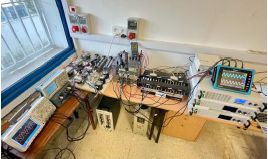
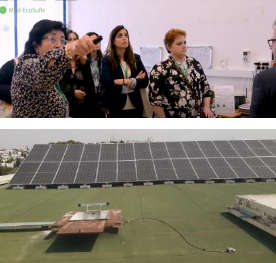
Entitled “Micro-Grids 2023: Technical and Economic Modeling and Real-Time Applications with OPAL-RT,” the summer school spanned four days and included a two-day workshop dedicated to young researchers. The training focused on real-time simulation and the Controller Hardware-in-the-Loop (CHIL) approach, fostering hands-on learning and innovation. The event highlighted the Micro-Grid energy units installed at ENIT, particularly the SMARTNESS (Smart Micro-grid Platform with an Energy Management System) initiative. Powered by photovoltaic solar panels, SMARTNESS serves as a platform for decentralized renewable energy generation and research into emerging concepts such as energy management systems, blockchain applications, and virtual power plants (VPP).
Med-EcoSuRe Project Mediterranean University as a Catalyst for Eco-Sustainable Renovation
The Med-EcoSuRe project positions Mediterranean universities as key drivers of eco-sustainable building renovation. It enables university facility managers—and, in the longer term, public building managers—to access a broad range of proven technologies, policies, and financing mechanisms aimed at improving energy efficiency and achieving cost-effective energy savings. The project also stimulates job creation and business opportunities in areas such as the installation and maintenance of energy-efficient systems, as well as the local production and marketing of sustainable construction materials.
While low-energy educational buildings are becoming the standard in European and Mediterranean regions, a gap remains between technical design models and their practical implementation. This gap often results from limited collaboration among key stakeholders and the lack of adequate public-sector tools to support such initiatives. Med-EcoSuRe addresses these challenges by introducing an innovative framework for defining and promoting cost-effective energy renovation strategies within university buildings, with the long-term goal of extending these practices to the broader public building sector.
A Mediterranean cross-border Living Lab, uniting researchers, building managers, companies, public organizations, and students, has been established to design and implement energy efficiency and renewable energy solutions, along with retrofitting schemes, across nine university buildings. The overarching goal of this initiative is to empower university managers to become active contributors in the co-creation and experimentation of emerging ideas, transformative scenarios, and innovative concepts that advance sustainable campus development.
Smart Transportation Week
The University of Tunis El Manar (UTM), in collaboration with the National Engineering School of Tunis (ENIT), the Tunis Rapid Rail Network Company (RFR), Helios Tunisia (BYD), and the National Road Safety Observatory, organized the Smart Transportation Week from 15 to 18 January 2024 at ENIT. The event addressed key themes such as:
- Sustainable transport
- Energy and electric vehicles
- E-mobility
- Scientific research in road safety and mobility
- The role of startups and the private sector
- The integration of new technologies within the urban rapid rail network (RFR)
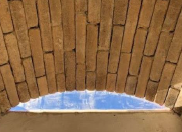
Conference on “Stabilized Compressed Earth Block”
The University of Tunis El Manar (UTM), in collaboration with the National Engineering School of Tunis (ENIT) and the GDA Sidi Amor Association, organized a conference on “Stabilized Compressed Earth Block: Durability, Stability, Seismic Resistance, and Arched Structures” on 14 February 2024. The event, featuring Satprem Maïni as a keynote expert, focused on sustainable construction techniques and the structural performance of earth-based materials in modern architecture.
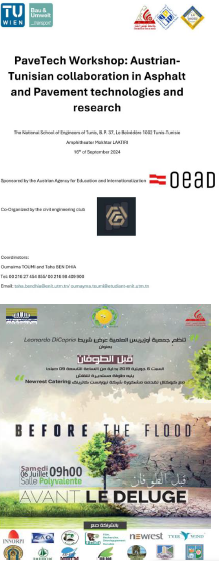
Workshop on Austrian–Tunisian Collaboration in Asphalt and Pavement Technologies and Research
The University of Tunis El Manar (UTM), in collaboration with the National Engineering School of Tunis (ENIT), TU Wien, BAU & Umwelt_Transport, and the Austrian Agency for Education and Internationalization, organized the PaveTech Workshop on 16 September 2024. The event brought together experts and researchers to exchange knowledge and foster cooperation in the field of asphalt and pavement engineering. Key topics included:
- Fate of Polymers in Recycled Asphalt: A Multiscale Approach
- Urban Heat Island Mitigation through Cool Pavement Technologies
- Experimental Approaches to Multi-Recycled Asphalt Mixtures
- Deflection Basin Indices for Pavement Assessment
- Life-Cycle Cost Analysis using Monte Carlo Simulation
- METAsphalt – Measures to Reduce Environmental Impacts and Energy Consumption
- Inverted Pavement Design
- Chemo-Mechanical Analysis of Bituminous Materials
- Performance-Based Specifications
- The Sponge City Principle in Austria
In partnership with the OSIRIS Scientific Association for Sustainability, UTM organized a screening of the documentary Before the Flood by filmmaker Fisher Stevens and co-producer Leonardo DiCaprio. Held at the Faculty of Sciences of Tunis, the event was followed by a roundtable discussion on the global challenge of climate change. Participants reflected on the film’s key messages—emphasizing the devastating effects of climate change and the need for both individual and collective action to safeguard the planet.
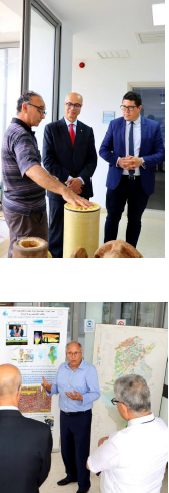
Global Sustainable Investment Policy
The University of Tunis El Manar (UTM) has adopted a comprehensive Sustainable Investment Policy that integrates sustainability and social responsibility as core components of its transition toward Établissement Public à caractère Scientifique et Technologique (EPST) status. This policy defines six key categories of sustainable investment designed to generate positive environmental and social outcomes while ensuring long-term financial sustainability. At its core, Socially Responsible Investment (SRI) guides the university’s approach by incorporating ethical and social criteria into investment decisions, excluding controversial activities, and prioritizing companies with demonstrated positive social impact. ESG integration further reinforces this commitment by evaluating corporate performance based on environmental, social, and governance standards, favoring entities with strong sustainability records. Through impact investing, UTM supports initiatives that deliver measurable social and environmental benefits, such as renewable energy development, clean water access, and affordable housing. The policy also ensures alignment with the United Nations Sustainable Development Goals (SDGs) by prioritizing investments that contribute to poverty reduction, climate action, and gender equality. Finally, community development investments emphasize local engagement, fostering economic growth and social well-being within Tunisian communities.
Green hydrogen (H2): the foundation of a sustainable & economical city
Proposed and coordinated by Professor Chiheb Bouden for the 2nd Year Civil Engineering Program’s Opening Week, this exploration of “Green Hydrogen and Sustainable Cities” positions green hydrogen (H₂) as a foundational pillar for urban sustainability. It is a pivotal technology for achieving carbon neutrality by decarbonizing sectors resistant to electrification and by storing surplus renewable energy. The result is a vision of cities powered by clean transport, energy-efficient infrastructure, and resilient energy systems.
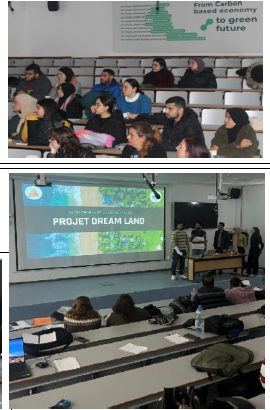
Ecology and sustainable construction: a tool towards a self-sufficient city, Systems Week
During Systems Week 2025 (March 3-7), focused on “Sustainable Construction and Resilient Infrastructure”, engineering students tackled the challenge of building a self-sufficient city. They brought this vision to life through a series of impressive projects: from self-sufficient schools and smart recycling plants to resilient water systems and eco-districts.
Their success was built on hours of research, reflection, and close collaboration, demonstrated by flawless organization and meeting all deadlines. More than just academic exercises, these projects were workshops for learning—deepening their expertise in sustainable construction, model building, and teamwork, while showcasing their remarkable ingenuity.
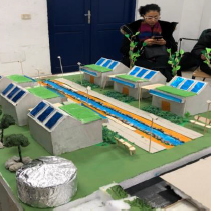
Sport, environment and citizenship: commitment to sustainable
development of cities
Aligned with SDG 11 for sustainable cities, the Faculty of Sciences of Tunis hosted an event on December 25, 2025. It merged sport, environment, and citizenship to promote sustainable urban development. The initiative engaged students as active agents in creating greener communities, directly supporting the goal of participatory urban planning and fostering resilient civic responsibility.
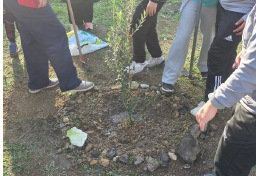
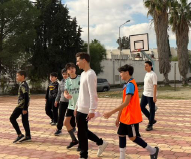
The program featured interactive sports to build cooperation, followed by planting an olive tree on campus. This living symbol reinforces urban greening and a tangible connection to the land. It models how integrating nature into cities enhances air quality, well-being, and long-term ecological stewardship.
This action demonstrates how youth participation drives sustainable urban futures. The lasting olive tree embodies the investment in education and civic engagement needed for resilient cities. It shows that building sustainable communities starts with committed, collective action and shared environmental responsibility.