Take urgent action to combat climate change and its impacts
Noamen Rebai
Professor at
“École Nationale d'Ingénieurs de Tunis”,
Tunis El Manar University responsible for
the Specialized Master's degree in Geomatics.
Noamen Rebai Professor at “École Nationale d'Ingénieurs de Tunis”, Tunis El Manar University responsible for the Specialized Master's degree in Geomatics.

Greenhouse Gas Emission Report and Sustainability Policy
The University of Tunis El Manar (UTM) released its Greenhouse Gas (GHG) Emission Report for the year 2022, using 2016 as the baseline reference: UTM GHG Report. Detailed information on the university’s carbon emission policies is available here: Carbon Emission Policy.
In alignment with its sustainability policy, UTM emphasizes a balanced approach integrating economic growth, social equity, and environmental stewardship. Its strategy seeks to advance institutional development while safeguarding the quality of life for present and future generations. Guided by ESG (Environmental, Social, and Governance) principles, the university is committed to fostering a sustainable and eco-friendly campus that optimizes the use of materials, space, and energy, while promoting the well-being of staff and students. This vision is implemented through three interconnected pillars: operations, awareness, and research.
Med-EcoSuRe Project (2019–2023)
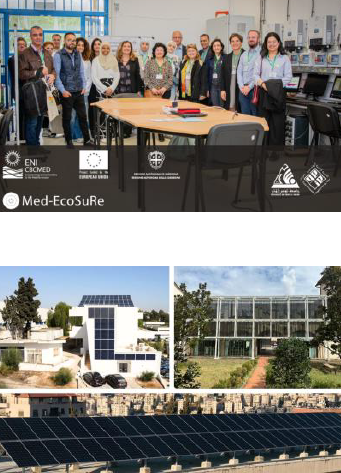
The Med-EcoSuRe Project introduces an innovative framework for promoting cost-effective energy renovation in university buildings, with the long-term goal of extending its outcomes to the wider public building sector. Through the establishment of a Mediterranean cross-border living lab, the project brings together researchers, building managers, enterprises, public organizations, and students to co-develop energy efficiency solutions, renewable energy initiatives, and retrofitting models across nine university buildings. Beyond its technical objectives, the initiative empowers university managers as active contributors in the co-creation and testing of innovative concepts and sustainable strategies. This collaborative approach reinforces the role of higher education institutions as drivers of sustainable transformation across the Mediterranean region.
MAR2PROTECT Project
The MAR2PROTECT Project adopts an integrated approach to safeguard groundwater resources against the impacts of climate and global change. Central to the project is an AI-driven Decision Support System (DSS) that combines technological data with societal engagement inputs to improve both the quality and availability of groundwater through Managed Aquifer Recharge (MAR) strategies. As a key partner, the Higher Institute of Applied Biological Sciences of Tunis (ISSBAT), University of Tunis El Manar, focuses on implementing advanced tertiary treatment processes to minimize pollutant infiltration into aquifers. The project’s Tunisian case studies, located in the Cap Bon Peninsula, serve as a model for sustainable groundwater management in semi-arid regions.
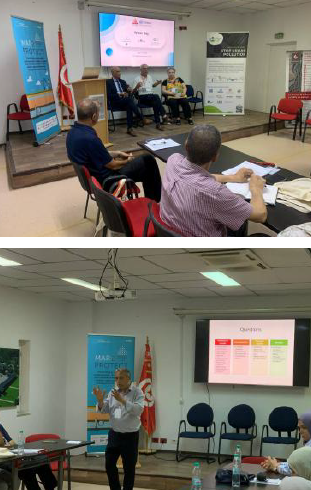
Implementation of Photovoltaic Panels at ENIT
In September 2023, the National Engineering School of Tunis (ENIT) launched a major sustainability initiative with the installation of photovoltaic panels across its campus facilities. This project marks a significant step toward reducing the university’s carbon footprint and advancing the adoption of renewable energy within higher education institutions.
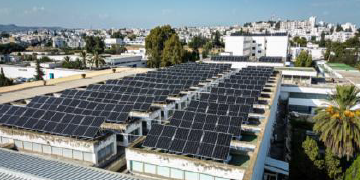
Tunisian–Bavarian Hub for Green Hydrogen and Climate Research Initiatives
Established at the National Engineering School of Tunis (ENIT) in May 2023, the Tunisian–Bavarian Hub for Green Hydrogen is part of the H2Vert.TUN project, implemented in collaboration with the Deutsche Gesellschaft für Internationale Zusammenarbeit (GIZ). The hub serves as a platform for research, training, and technological exchange, dedicated to advancing green hydrogen production and decarbonization technologies in Tunisia.
Green hydrogen, produced via water electrolysis powered by renewable energy, represents a key pathway toward industrial decarbonization. Its zero greenhouse gas emissions and flexibility in storage and distribution offer significant potential for Tunisia’s domestic energy transition and export markets.
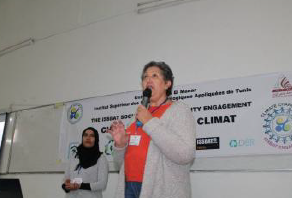
The initiative promotes scientific and technological cooperation between Tunisia and Bavaria, fostering knowledge transfer, capacity building, and the development of sustainable energy systems. In 2023, ENIT hosted several related scientific events, including the International Congress “Artificial Intelligence Role & Climate Change Impact”, the 3rd International Congress “ISEE Geomatics”, and the National Conference “New Data for the Management of Our Resources”, which focused on energy resource management and digital innovation.
In parallel, doctoral and master’s research projects have expanded within this framework, including:
• Climate Impact on Marine Intrusion – assessing the hydrodynamics and climate-driven salinity changes in Lake Ichkeul using the MOHYB numerical model.
• Intelligent Systems for Environmental Monitoring – developing AI-based tools for monitoring contamination risks in the Bizerte Lagoon through integration of geochemical, GIS, and deep learning (OP-LSTM) models, leveraging over two decades of environmental data (2002–2023).
These combined initiatives position UTM and ENIT as regional leaders in climate resilience, renewable energy innovation, and AI-driven environmental management, directly contributing to SDG 7 (Affordable and Clean Energy), SDG 13 (Climate Action), and SDG 14 (Life Below Water).
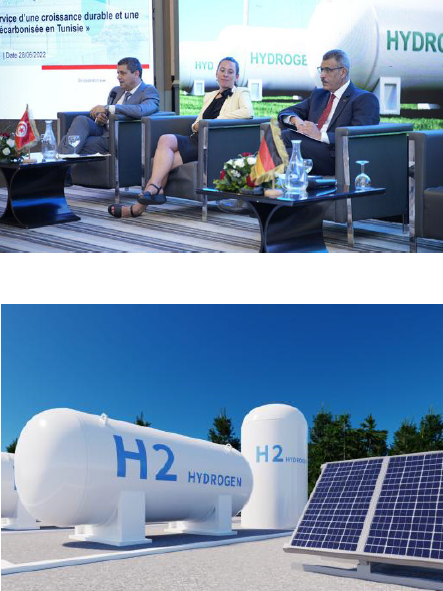
Innovation Competition
Creative and sustainable innovation has been at the heart of recent student achievements at ENIT:
• Shell Eco-Marathon (June 30, 2022): The ENITECOCAR team showcased their energy-efficient prototype vehicle, achieving an impressive 18th place globally with a performance of 222 km/L, highlighting the students’ technical expertise and environmental commitment.
• 14th INJAZ Tunisia National Competition – “The Entrepreneurs of the Future”: The Supclay team earned the Best Young Company Award for developing clay-based cement, a sustainable alternative to traditional Portland cement. Their success qualified them to represent Tunisia at the regional finals in Qatar in November.
Specialized Training and Workshops:
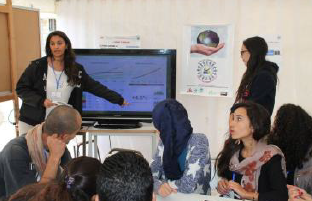
• AI, Climate Change and Geomatics Training (November 2, 2023): Organized within the framework of the international congress on the same theme, this session emphasized practical methods for data analysis, environmental modeling, and sustainable management of natural resources.
• GREECON Workshop – Ecological Construction (February 2, 2023): Hosted at ENIT, this event focused on sustainable and ecological construction practices. It was jointly organized by the Civil Engineering Club, 3Zeros Club, and IEEE ENIT Branch, promoting innovative building materials and green engineering solutions.
• AI, Climate Change & Geomatics Workshop (October 30, 2023): Part of the international congress “ISEE Geomatics”, this workshop brought together professionals and researchers to exchange expertise on geomatics, artificial intelligence, and their applications in climate impact assessment.
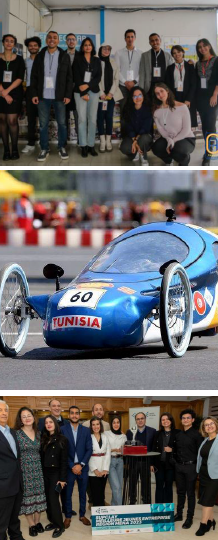
Fieldwork Activities
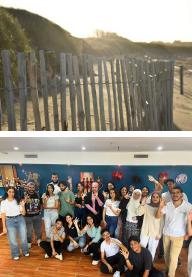
As part of the Civil Engineering Department’s training program at ENIT (UTM), students participated in field visits to Korba, Nabeul in 2023, focusing on monitoring and surveying the impacts of climate change on coastal areas. The fieldwork explored strategies for coastal management and climate resilience, emphasizing practical observation and analysis of “Ganivelles”, wooden fences installed to protect and stabilize sand dunes. This initiative, part of the Ganivelles research project, aims to reduce the vulnerability of Korba beach by preventing sand dispersion and fostering the formation of embryonic dunes. These dunes act as natural barriers against storms and other environmental phenomena intensified by climate change, contributing to the sustainable preservation of Tunisia’s coastal ecosystems.
Club Initiatives: Advancing the 3Zero Mission
Established in October 2022, the club operates across 17 universities and is dedicated to promoting the 3Zero initiative, which focuses on Zero Exclusion, Zero Carbon, and Zero Poverty. The club’s activities aim to foster a sustainable campus environment and contribute to the broader achievement of the Sustainable Development Goals (SDGs). Since its inception, the club has demonstrated measurable impact, including 75 publications, 1,125 citations, and 235 views, reflecting its active engagement in research dissemination, awareness campaigns, and collaborative sustainability projects.